
Guides
How a fence contractor business chooses an entry route and phases the first season
A fence contractor startup guide: the operations behind a quote, the zoning and utility permissions, entry routes compared and five steps for a first season.
What to take away
- A fence price is set by the ground, the boundary and the permissions, and none of those three can be read from a phone call.
- The survey is the largest single unknown in most residential quotes, because a line that turns out to be wrong turns a finished job into a removal job.
- Post depth, gate hardware and slope are where a fencing estimate goes wrong; panel count is the easy part.
- There is no national answer to how high a fence may be or how deep a post must go, so a startup plan that does not name the bodies it will ask is not a plan.
What a fence quote is actually made of
Most people picture a fence as a length of material and a price per foot. The bill of work is not shaped that way. A quote is built out of operations, and the operations that take the day are rarely the ones the customer is looking at.
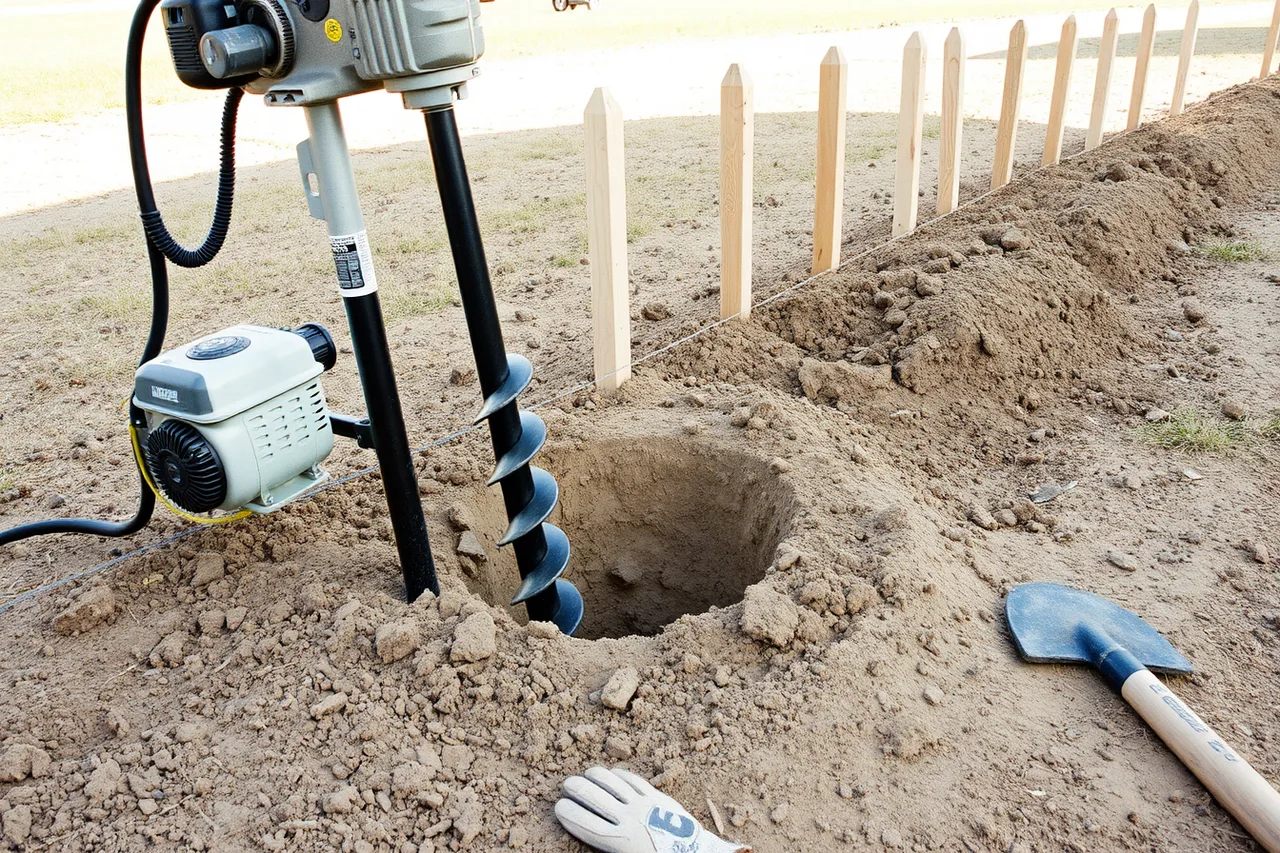
Laying out the run comes first, and it depends on where the boundary is. Locating buried utilities comes next; it is not optional. Then digging, the operation the soil controls: a hole in sand, a hole in clay, and a hole in fractured rock are three different jobs with the same drawing.
Setting posts, waiting for concrete, hanging panels, and hanging the gate. The gate is a fraction of the material and a disproportionate share of the callbacks.
An owner who prices per linear foot without a rule for the operations underneath it will win the jobs that are hard and lose the jobs that are easy. That is the failure mode worth designing around before the first truck is bought.
Read the ground before you read the market
The physical conditions in a service area decide what kind of fencing business can exist there, and they vary over short distances.
Frost movement sets how deep a post has to go to stay put through a winter. That depth is not a national figure and not a manufacturer's figure: the local building department is the body that will tell you what applies where you work, and it is the first call to make.
Soil type sets how long a hole takes and whether an auger is enough or a machine has to break rock. Water table decides whether holes stay open. Slope decides whether a run gets stepped or racked, which changes panel count and can change the material entirely.
Material behavior follows the same logic. Wood moves with moisture and keeps moving after installation, so a perfect run can bow by next season.
Vinyl gets brittle in deep cold and is unforgiving of an impact in January. Chain link depends on tension pulled and held correctly; a slack fabric is visible from the street for the fence's life.
Who buys fencing, and what triggers the call
Fencing demand is event driven. Almost nobody wakes up wanting a fence. Something happens first.
Worth listing: each event arrives through a different door, carrying a different urgency.
A property changes hands, a dog or child arrives, and a pool goes in, making a barrier a permitting matter, not a preference.
Storm drops a tree across a run, neighbor disagreement becomes boundary question, and builder needs a subcontractor, buying on schedule reliability, not price.
Those buyers do not behave alike. The storm-damage caller wants speed and will accept a repair. The pool owner has an inspection date and a specification.
The builder wants a crew that shows up on the day it promised. A startup serving all of them in its first season usually serves none well.
The permissions layer you cannot skip
Three separate authorities can each say no to the same fence, and they do not talk to each other.
The municipality sets zoning rules that can govern height, setback from the property line, which side the finished face must show, corner sight triangles, and whether a permit is required at all. Ask the local zoning or building department directly, in writing, for the parcel in question.
A homeowners association can be stricter than the municipality and often is. Its covenants are a private contract, they are enforceable against the owner, and they frequently name permitted materials and colors. The customer holds that document, not you.
Buried utilities sit under all of it. Before any hole is dug, the state one-call locating service is contacted through 811, and the marks are honored. This is the one item on the list where being wrong is not a paperwork problem.
What the evidence can and cannot settle
Public sources are useful for the parts of the business that are not site specific, and useless for the parts that are.
The U.S. Small Business Administration: SBA Business Guide sets out the sequence of forming, funding and running a small business, which is the same for a fence crew as for anyone else. It will not tell you what your local zoning office requires.
The Internal Revenue Service: Starting a business pages cover choosing a structure, obtaining an employer identification number, and the federal tax obligations that follow. Those obligations do not vary by soil type, so they are worth settling early and then leaving alone.
The Occupational Safety and Health Administration: Fall Protection in Residential Construction guidance matters once work moves above grade, which fencing does more often than owners expect: retaining walls, elevated decks, and pool enclosures on graded lots.
The U.S. Bureau of Labor Statistics: Occupational Employment and Wage Statistics Tables publish employment and wage estimates by occupation, industry, state and metropolitan area. They are one input into what a crew costs in a given place. They are not a quote for your labor, and they do not describe your productivity.
Approaches to entering the trade compared
What it demands
- Residential repair and gate work
- Small tool kit, fast diagnosis, tolerance for short jobs
- Full residential replacement
- Layout skill, digging capacity, deposit handling
- Builder and developer subcontract
- Schedule reliability, capacity to float materials
- Agricultural and acreage fencing
- Machinery, long runs, wire tensioning skill
- Commercial and security fencing
- Specification reading, documentation, insurance depth
Where it breaks
- Residential repair and gate work
- Revenue per day stays low without dense routing
- Full residential replacement
- One bad boundary assumption removes a season of margin
- Builder and developer subcontract
- Payment terms are set by someone else
- Agricultural and acreage fencing
- Travel time swallows the day
- Commercial and security fencing
- Bid cycles are long and unpaid
The table is a starting frame, not a ranking. The right entry depends on what the ground in your area will let a small crew do profitably.
Phasing the first season
- Settle the permissions layer before quoting anythingregistration, insurance, and a written note of which local office answers height, setback and permit questions.
- Run one fence type only until the crew can install it without the owner watching. Repetition is what turns an estimate into a reliable estimate.
- Start recording actual hours per operation on every job, split into layout, locating, digging, setting, panels and gate. This record is the foundation of every price you will set later.
- Add a second fence type only when the first one produces a predictable day.
- Review the recorded hours against the quoted hours at the end of the season and correct the estimating rule, not the price list.
Where a new operator loses money
The losses cluster in a few places, and they are all foreseeable.
Don't quote from aerial images without walking the site, and don't accept the customer's account of the line route. Don't dig before locate marks arrive or after they expire.
Don't price a gate like a panel or treat concrete cure time as free time instead of a scheduling constraint. Don't take a deposit smaller than the material order it must fund.
None of these are exotic. They are the ordinary ways a fencing job turns from profitable to loss-making, and they are all decided before the first post goes in.
Common questions
Can this page tell me how tall my fence can be?
No, and any page that gives you a number is guessing. Height limits are set locally and can be modified by a homeowners association. Ask the municipal zoning or building department for the specific parcel, and ask the customer for their association covenants.
How deep should posts be set?
Deep enough to sit below the depth that frost reaches in that location, which the local building department can tell you. This is one of the few places where copying a neighboring county's practice is genuinely risky, because frost depth changes with geography and the consequence of getting it wrong appears a year later.
Do I need a survey on every job?
Not always, but you need to know when you do. If the fence is going near the line, if the neighbor has an opinion, or if the customer cannot show you a pin or a plat, the survey is cheaper than the removal. Write into the quote who is responsible for establishing the boundary.
Is fencing seasonal?
In most places the digging season is shorter than the selling season, and frozen or saturated ground stops work outright. Build the cash plan around that gap rather than assuming twelve even months.