Guides
Fence contractor staff training: how to sign off each item
How to sign off fence contractor staff training: the physical check for each competency, from locate marks to gates and records, and how to record it.
What to take away
- A sign-off needs three thingsthe person did the task correctly and unsupervised, someone physically checked it, and the record carries a name and a date.
- "Has been shown" is not a sign-off and should not appear anywhere on the record.
- Physical checks beat conversations, because a post is plumb or it is not, and a gate swings clear or it does not.
- The safety items are not a first day formality. Two of them are the reason this trade has a locate service at all.
- Check the groups in the order the job runs. People learn digging before layout because that is what they meet first.
What a sign-off record holds
Each item takes a name, a date and the person who checked it, because a record without those is a note about attendance. The check itself is physical: the checker watches the task, looks at the result, and only then writes the date.
Do not sign off a group just because the person was present while someone else did the work. Whoever signs must be competent at the task already, which on a very small crew means the owner. The rungs these items map onto are defined by unsupervised capability, as the crew skill ladder sets out.
Group one: safety and site conduct
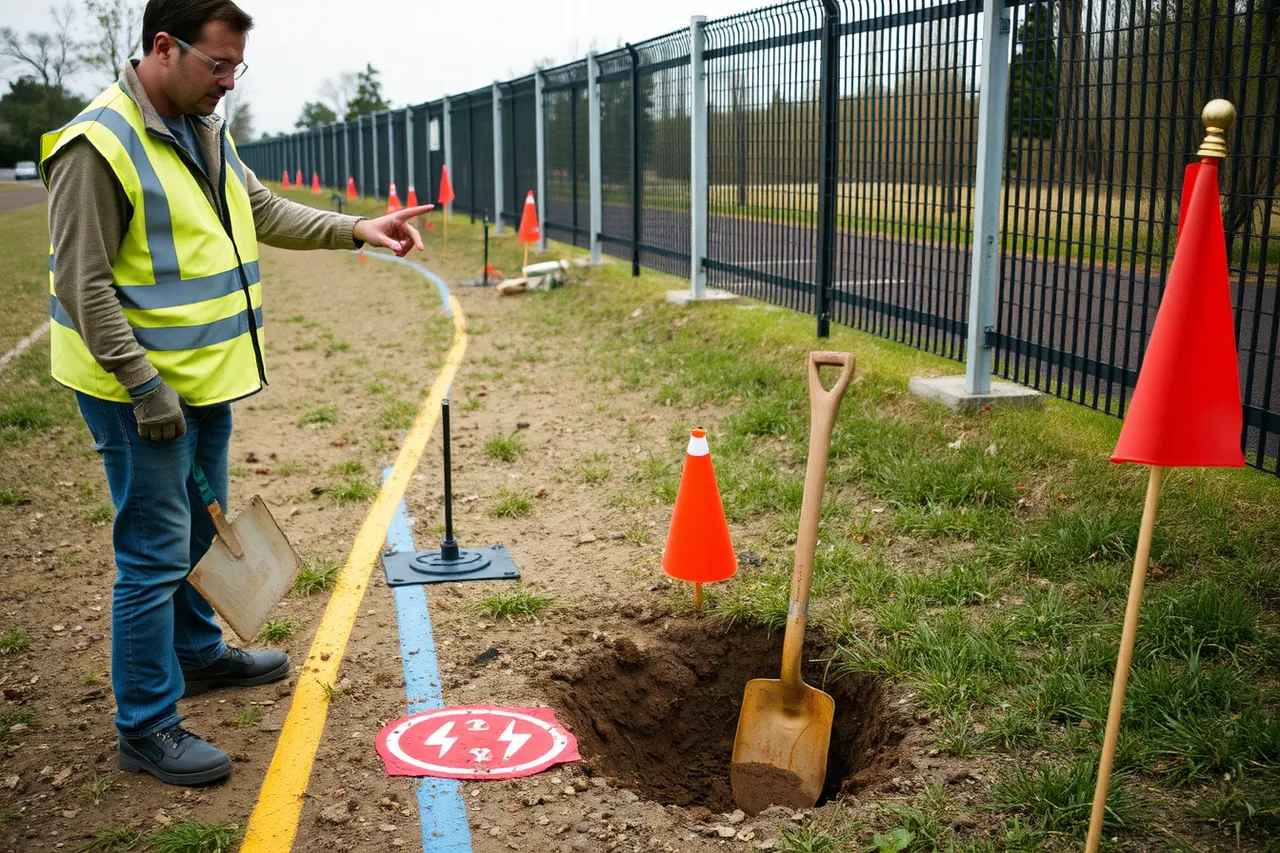
No hole is started before the utility locate marks are present and valid, and the checker starts there. The guide to utility locates names the offices behind that rule.
| Item | How the checker confirms it |
|---|---|
| Knows what locate marks are, what the colors mean, and that no hole is started before they are present and valid | Asks the person to read the marks on a live site and say where digging may start |
| Hand digs the first part of any hole near a marked service, and stops and raises anything unexpected | Watches the first minutes of a dig beside a mark |
| Identifies the hazards on a fencing site: open holes, panel handling, concrete, tool use, and work above grade | Walks the site with the person, who names each hazard |
| Wears and maintains the protective equipment required for each task | Looks at the equipment on the person and its condition |
| Knows what to do if a service is struck or somebody is injured, including who to call first | Asks the person to say the sequence, starting with who to call |
| Leaves a site safe: holes barriered or backfilled, tools cleared, no trip hazards for the customer | Walks the site at close, before the person leaves |
Group two: materials and hand digging
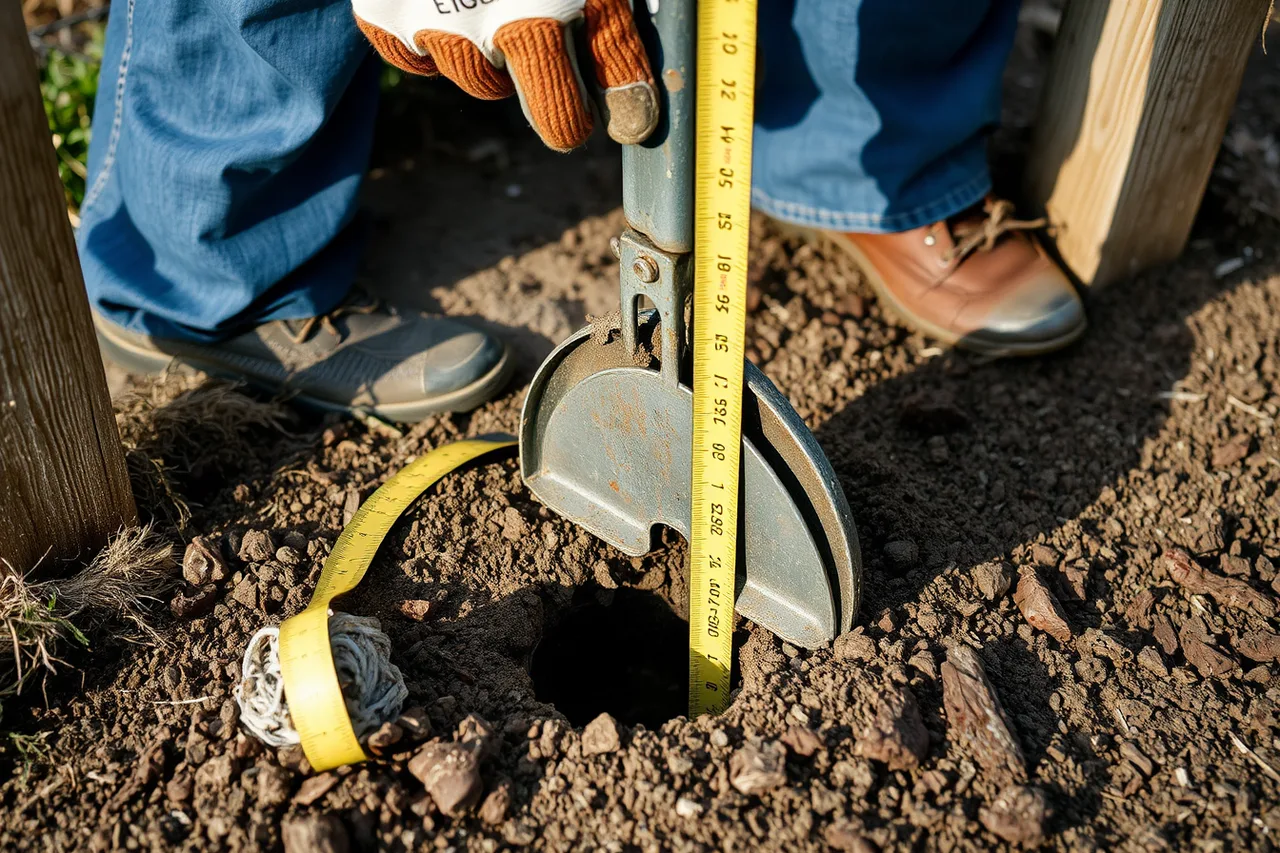
The checker measures here rather than judges. A hole is the depth marked or it is not, and the tape settles it.
| Item | How the checker confirms it |
|---|---|
| Loads and unloads without damaging materials or leaving the truck unbalanced | Watches a full load and unload, then looks over the materials for damage |
| Handles panels, posts and fabric correctly, alone and in pairs | Watches both ways of handling |
| Digs by hand to a marked depth and measures rather than judges | Puts a tape in the hole |
| Manages spoil: contained, moved, or removed as the job requires | Looks at where the spoil sits at the end of the day |
| Mixes and places concrete to the correct consistency for the product being used | Checks the mix against the product being used |
Group three: setting
A post set badly is hard to see once the run is up, so the check happens at the post. The checker needs a level and a return visit.

| Item | How the checker confirms it |
|---|---|
| Sets posts to the depth standard recorded for the job | Measures the depth against the job file |
| Plumbs on two faces, not one, and rechecks after backfilling | Puts a level on both faces, then again after backfill |
| Braces posts so they hold position through cure | Returns to the post after cure and checks that it still stands where it was set |
| Understands why depth matters against local frost conditions, and knows that the standard comes from the building department rather than from habit | Asks where the depth standard comes from |
Group four: run work
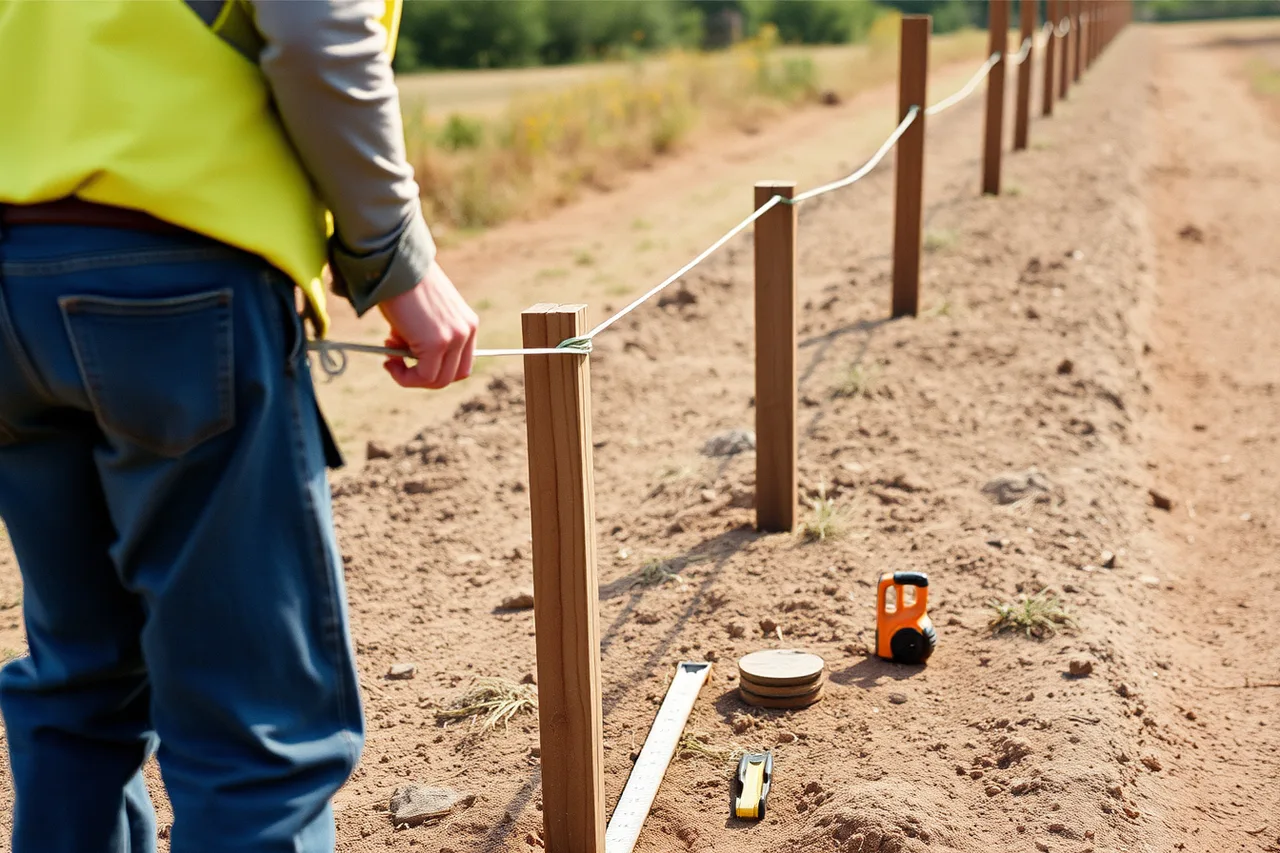
Run work is checked over its whole length, because a short sample hides drift. The checker pulls a line and looks along it.
| Item | How the checker confirms it |
|---|---|
| Works to a string line and can pull one over the full length of a run | Asks the person to pull the line and walk it |
| Achieves consistent spacing, with irregular bays placed deliberately | Measures the bays along the run and asks about any irregular one |
| Sights tops for height consistency and even steps on sloped ground | Sights along the tops from the end of the run |
| Tensions chain link fabric evenly with no visible wave | Looks along the fabric for a wave |
| Manages the gap at grade to the range recorded in the job file | Measures the gap at points along the run against the job file |
The record of the gap at grade belongs in the service standard, so the checker has a number to measure against.
Group five: gates
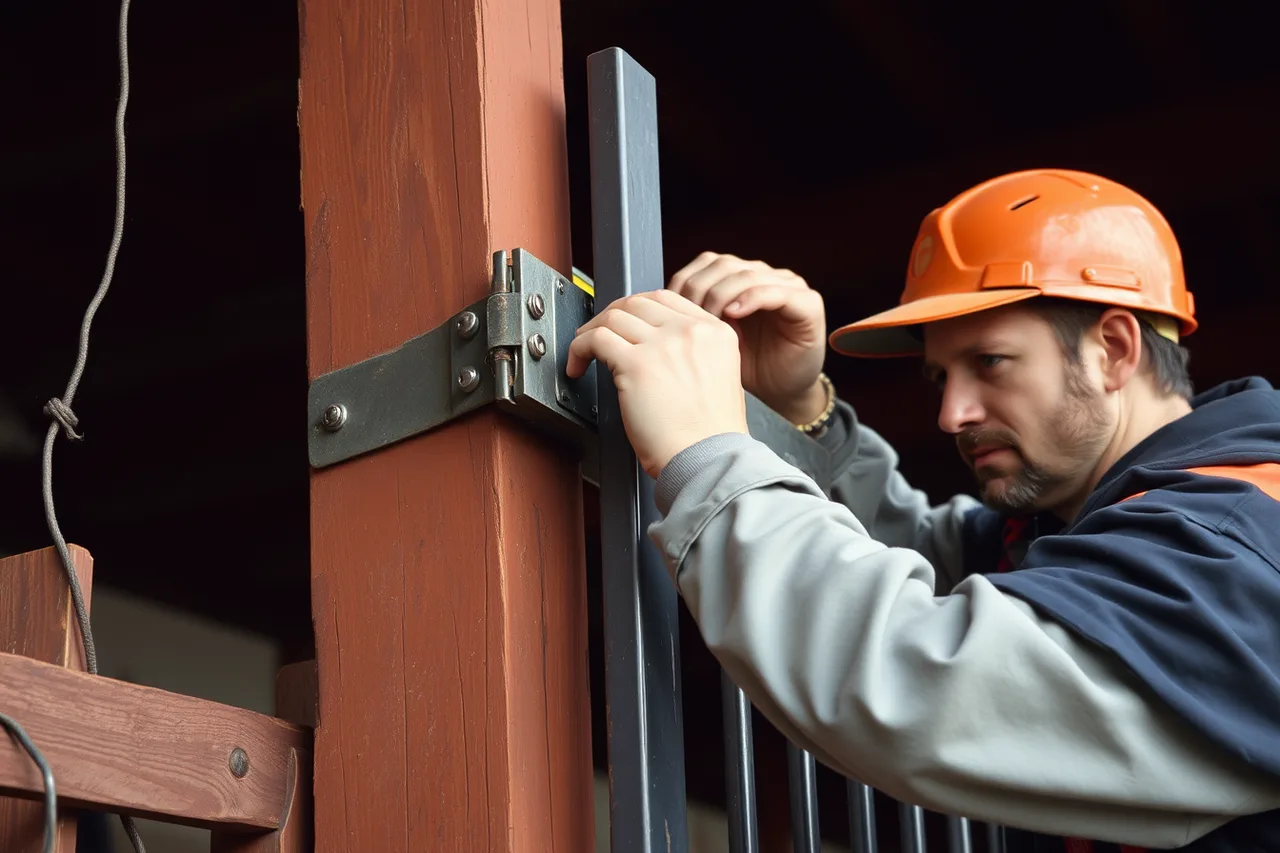
A gate shows its faults on the first swing. The checker operates it, because a gate that looks square closed can still fail across its arc.
| Item | How the checker confirms it |
|---|---|
| Understands that a gate post carries a moving load and is sized and set differently from a run post | Asks the person to explain the difference from a run post |
| Hangs a gate square with an even gap down the closing edge | Measures the gap down the closing edge |
| Checks the swing across the full arc rather than only at the closed position | Swings the gate through the full arc and watches the clearance |
| Fits and adjusts hardware, including any drop rod or ground stop | Operates each piece of hardware |
| Can explain to a customer why the gate may need adjustment after the ground settles | Asks the person to say it as they would to the customer |
Group six: equipment
Equipment sign-offs name the machine. A person cleared on one piece of powered equipment is not cleared on the next.
Item / How the checker confirms it
- Cleared, by name and date, for each piece of powered equipment they operate
- Reads the record: one line per machine, with a date
- Performs the daily checks on that equipment and knows what stops it being used
- Watches the daily check and asks what would stop use
- Knows the access and ground limits: width, weight, and what a machine does to a finished lawn
- Asks about the limits on the next job's site
Group seven: records and customer contact
This group is checked on paper and on site. The records show what was done, and the boundary conversation shows what the person will promise.
| Item | How the checker confirms it |
|---|---|
| Completes the job records that the business relies on, including hours split by operation | Reads one finished job's record |
| Photographs the locate marks, the site condition before work, and the completion views | Looks for the three sets of photographs in the job file |
| Records a variation before doing it, rather than after | Compares the variation record's date with the work date |
| Knows the boundary conversation: what to say, what not to promise, and when to stop and call the owner | Asks the person to say it, and listens for the promise they avoid |
What the sign-offs cost
Training carries a cost, so cost it rather than absorb it. A person part way through this list is paid while producing less installed fence than a signed off installer, and that difference belongs in your labor rate.
The Bureau of Labor Statistics wage tables publish employment and wage estimates by occupation, industry, state and metropolitan area.
Training time is time worked. The U.S. Department of Labor new and small businesses page covers the federal wage and hour rules and recordkeeping that apply, and training hours are not an exception to them. What each step adds to pay is worked through in pay rates and labor costs.
Applying the list consistently to everybody matters for more than fairness. The U.S. Equal Employment Opportunity Commission sets out the anti-discrimination obligations that apply to small employers, and an identical sign-off record for every person is a straightforward way to show consistency.
Common questions
How long should this take for a new person?
Groups one and two in the first days, three and four over the first weeks, five and six when the run work is reliable. Rushing group five produces confident gate mistakes.
What if the person passes the conversation but fails the physical check?
The item stays unsigned. A post is plumb or it is not, and a gate swings clear or it does not. Show the person the result, let them redo the task, and date the sign-off from the second attempt.
What if somebody stalls at one group?
Keep them there and pay them for being good at it. Not everybody wants to run a job, and forcing progression loses people who were valuable exactly where they were.
Should the checklist ever shrink?
It should change whenever a callback reveals a gap, which usually means adding rather than removing. Remove an item only when it has stopped catching anything for a long time.