
Guides
How to write fence contractor service standards: five parts and a gap at grade example
A guide to writing fence contractor service standards in five parts: attribute, acceptance test, tool, owner, and action on failure, with a gap at grade example.
What to take away
- A standard is not a checklist. The checklist says what to check; the standard says what counts as right and what to do when it is not.
- Write each standard as five partsthe attribute, the acceptance test, the tool, the owner, and the action on failure.
- The hardest standards to write in fencing are the ones about tolerance, because the honest answer is often that the tolerance is set by the customer's eye and by the local requirement.
- Keep the document short enough that it lives in the truck. A standard nobody carries is a standard nobody follows.
The difference between a standard and a checklist
A checklist asks whether something was done. A standard says what good looks like and how you know.
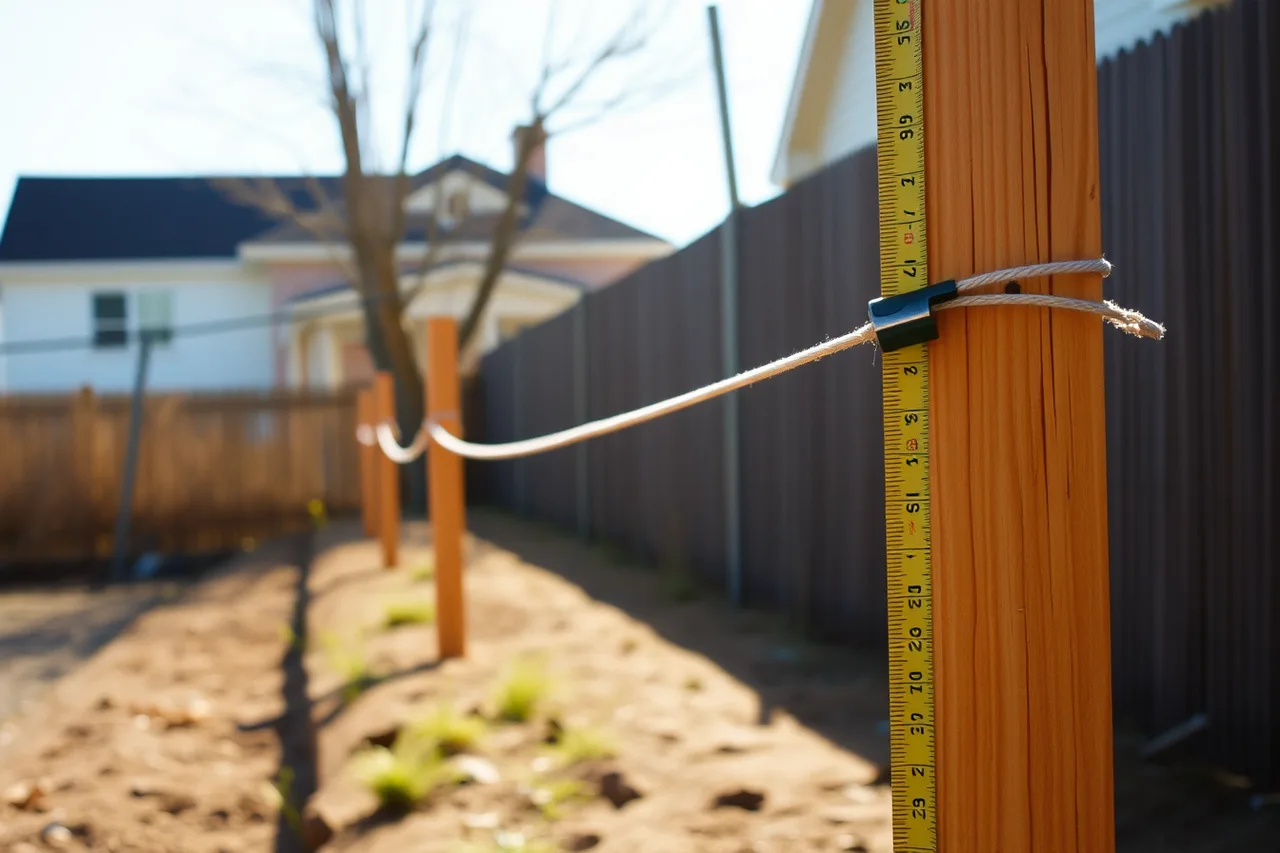
The distinction matters where judgment enters, and "Check the line" is a checklist item. The standard says a run is straight when a string pulled end to end shows no post off the line by more than the agreed tolerance. That tolerance is measured at the post and stated in the job file.
The first can be ticked while looking at the fence from a car, but the second cannot.
The anatomy of one standard entry
Every entry in the document should carry the same five parts.
Attribute. The physical thing being controlled. Line, plumb, spacing, height consistency, gap at grade, gate operation, cleanup.
Acceptance test. How you decide whether it passes, written as an action with an outcome rather than as an adjective.
Tool. What performs the test. A string, a level of a stated length, a tape, or the gate itself swung through its arc.
Owner. The role that performs it, and at which point in the job. Naming a moment is what makes it happen: after setting and before panels, or before the crew packs up.
Action on failure. What is done, by whom, and whether the job can continue. This is the part most standards omit, and it is the part that decides whether the standard changes behavior.
A worked entry
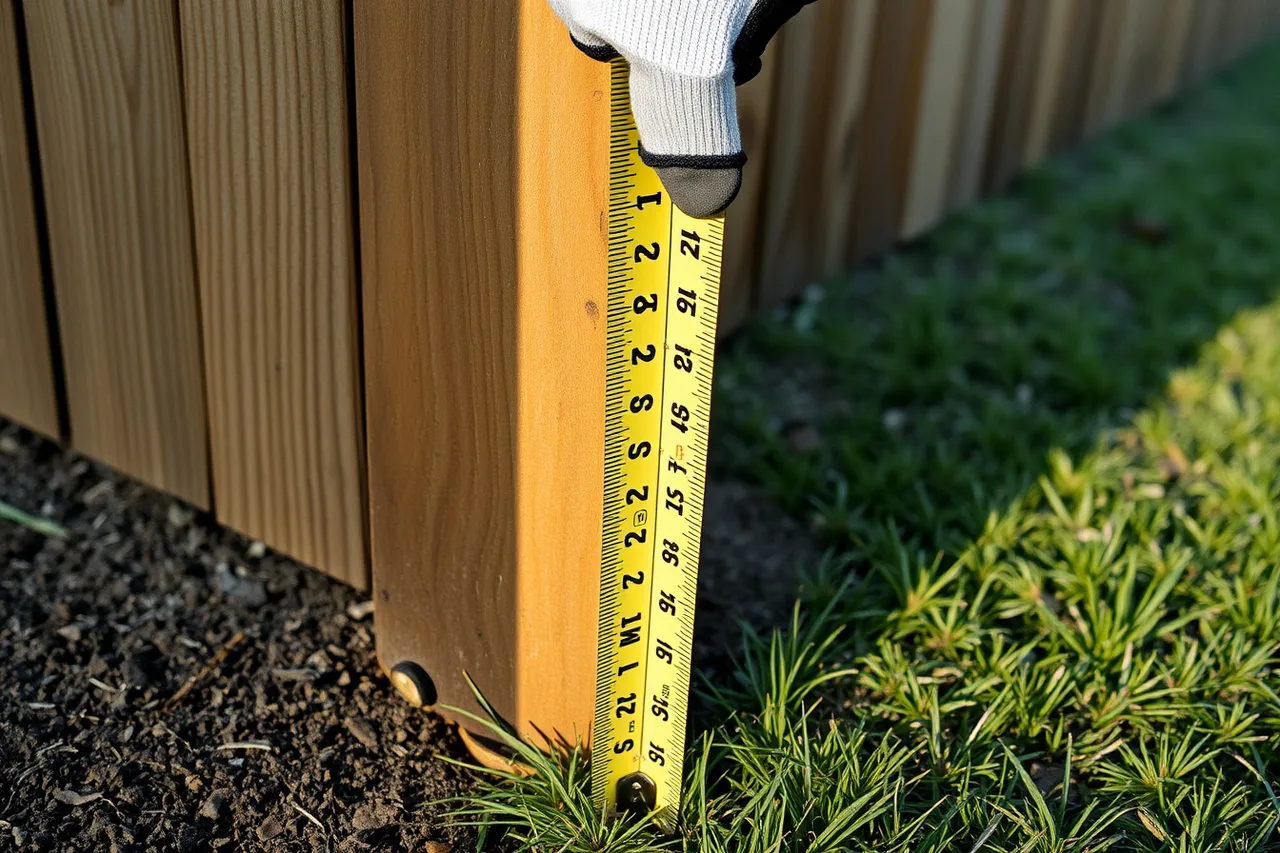
Attribute: gap at grade. Acceptance test: measured at each end, at the midpoint, and at any point where the ground changes slope, and the measurements fall within the range recorded in the job file. Tool: tape. Owner: the installer, before the crew packs up. Action on failure: close the gap where the material allows; where it does not, record the measurement, photograph it, and tell the customer before leaving site.
That entry can be followed by somebody who has never met you, at four in the afternoon, in the rain.
Where tolerances actually come from
This is the section that separates an honest fencing standard from a copied one.
Some tolerances are set by an authority. Post depth follows what the local building department applies where you work. A pool barrier follows the specification the authority names.
Those are not yours to choose. The standard should say so and point at the source, not print a figure that may be wrong in the next county.
Some are set by the material: wood moves, so a gap correct on installation day will change. Vinyl profiles have their own expansion allowances, and chain link needs tension held.
A standard that ignores this sets the crew up to fail a check no installation could pass. Material movement also drives cure and gate tooling choices in the fence contractor equipment and setup guide.
The rest are yours, and they should be written down and agreed with the customer rather than left to be discovered. Gap at grade on sloped ground is the clearest example, and it belongs in the quote.
Writing the document
- Start from the failures you have actually had, not from a generic list. Six entries that address real callbacks beat thirty that address nothing.
- Write each entry in the five parts above, in the same order every time, so the crew learns the shape.
- Put the tool in the entry, then confirm that tool is on the truck. If it is not, the standard is aspirational.
- Name the moment rather than the hour. Job stages are what a crew experiences; clock times are not.
- Test it by handing it to somebody who was not there when it was written and watching them use it.
- Date it, version it, and keep the superseded copies out of the truck. Two versions in circulation is worse than none.
What the document connects to
The checks themselves live in the fence contractor quality assurance checklist, and the reasoning behind which attributes matter is in the fence contractor service quality guide. The standards are the layer between them.
A standard that requires a tool creates an obligation on the kit, which is why the equipment checklist for new owners and the fence contractor equipment and setup guide should be revised together with it. Where standards imply hours, those hours belong in the estimate, and the commercial framing sits in the fence contractor business plan.
Safety standards are not optional and not yours to set. Where work goes above grade, the Occupational Safety and Health Administration: Fall Protection in Residential Construction guidance sets out what is expected, and a written standard should point at it rather than paraphrase it.
Keep the versions and the completed records. The Internal Revenue Service: What kind of records should I keep? guidance describes a recordkeeping system supported by underlying documents, and completion records against a dated standard are exactly that.
If the standard covers how you ask customers for feedback, follow the U.S. Federal Trade Commission: Soliciting and Paying for Online Reviews: A Guide for Marketers guidance: ask genuine customers, do not select only the ones likely to praise you, and disclose material connections.
Common questions
How long should the document be?
Short enough to carry and long enough to cover the failures that cost you money. Most small fencing operations need fewer than a dozen entries.
Should tolerances be shown to customers?
The ones that affect what they will see, yes, especially the gap at grade on sloped ground. Agreeing it in writing before the work removes the most common source of a dispute at handover.
Who owns the document?
One person, who is also the person who updates it when a callback reveals a gap. Shared ownership of a written standard reliably produces a document that stops being updated.
What if a customer wants a tighter tolerance?
Then it is a different job with different hours, and it should be quoted that way. Agreeing to a tighter standard without changing the estimate is how a good job becomes an unprofitable one.