Guides
More referrals for a fence contractor business: what actually works
Fence contractor referrals are produced by four moments on the job: the boundary talk, the locate marks, the gate handover and the ground you leave.
What to take away
- Referrals in fencing are produced by specific moments on the job, not by asking at the end. Audit those moments and the referrals follow.
- The neighbor is the highest value audience on almost every residential job, and most crews never speak to them.
- Four moments do most of the workthe boundary conversation, the locate marks, the gate handover, and the state of the ground when you leave.
- An incentive attached to a public review is regulated. An introduction and a review are not the same thing, and confusing them is a common mistake.
Referrals are made during the job
The usual advice is to ask for referrals afterward. That treats the referral as a request rather than as a result, and it explains why asking rarely works.
A person refers you because they can say something specific. Not that you were good, but that you explained where the line came from before you dug.
Or that they watched you talk to the neighbor, or that the yard was cleaner when you left than when you arrived.
Those sentences come from particular moments, and those moments can be audited.
Audit these four moments
The boundary conversation. Did somebody actually ask where the line came from, in front of the customer, and write the answer down? This is the moment that separates a contractor from a fence installer in a customer's mind, because it shows you understand what can go wrong.


The locate marks. Did the crew explain what the marks were, in one sentence, when the customer asked? Customers notice the paint. A crew that can explain it in plain language looks careful. A crew that ignores the question looks like they might dig anyway.
The gate handover. Did somebody walk the customer through the gate: the full swing, the latch, the adjustment they may need after the ground settles? The gate is the part they touch daily, and a two minute handover converts the most callback prone item into a demonstration of competence.
The ground when you left. Spoil dealt with, offcuts and fasteners swept, ruts made good, old fence gone if it was in scope. This is the thing neighbors and visitors see for weeks afterward.
Run each of these as a question against recent jobs. Wherever the honest answer is that it did not happen, that is the referral you did not get.
| Moment | The question to ask of a recent job | What a yes produces |
|---|
Four moments to audit
- Boundary conversationline asked and recorded
- Locate marks explained in one sentence
- Gate handoverswing, latch, adjustment
- Ground left cleanspoil, offcuts, ruts
The neighbor, deliberately
Every boundary fence has a second audience who did not pay you and who watched the whole job.
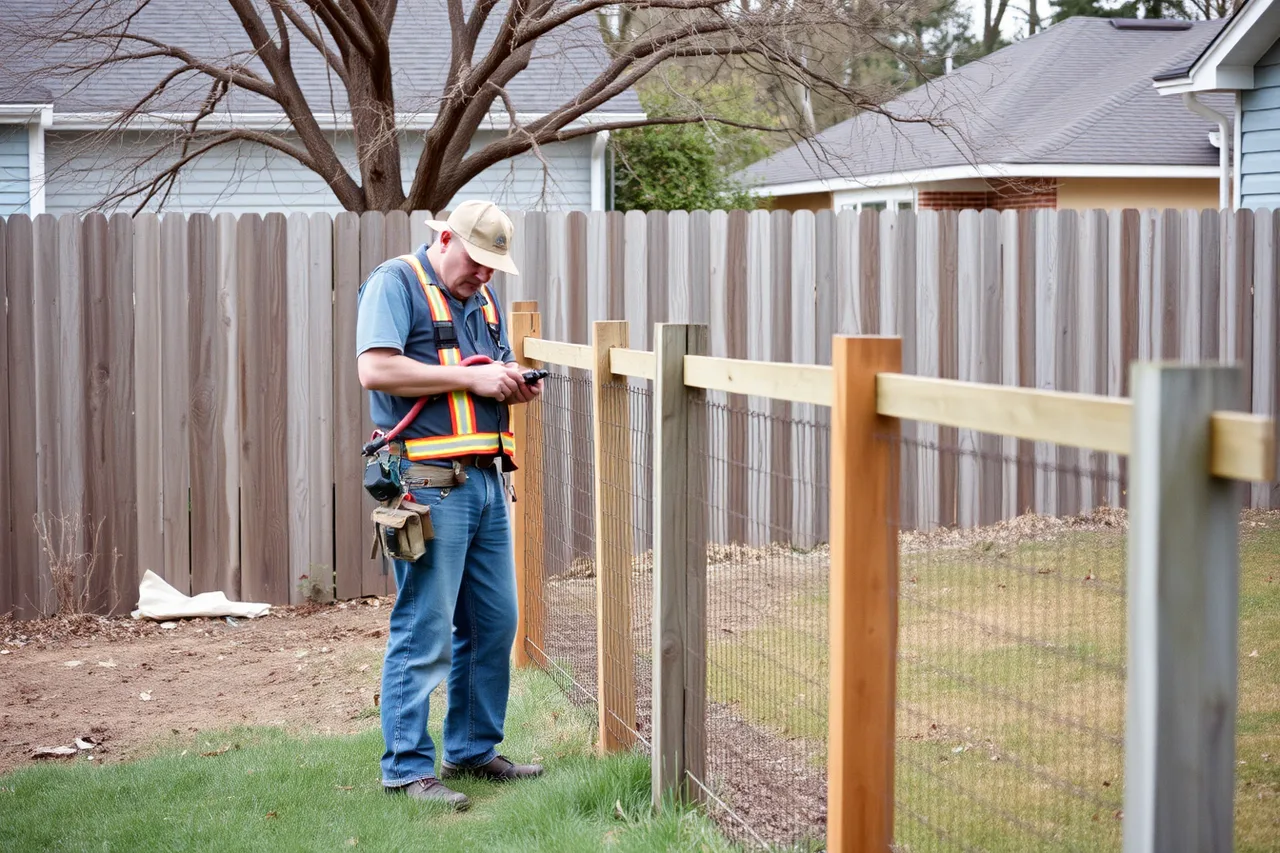
Speak to them before work starts. Say who you are, what is happening, roughly how long it will take, and that the crew will keep the access clear. On a boundary run, mention that the line has been discussed with the property owner. It costs a few minutes and it removes the most common source of a mid-job problem.
The commercial effect is direct. They now have a specific opinion about a specific contractor, they have your name, and they have a fence of their own that is a year older than the one you just built. That is a better introduction than any advertisement, and it is free.
Making the referral easy to give
A person who wants to refer you needs three things: something specific to say, a way to pass on your details without effort, and the sense that you will treat their contact well.

Give them the first by doing the four moments above. Give them the second with something physical and small that can be handed over. Give them the third by responding to a referred call quickly and by mentioning who sent them.
Then close the loop. Tell the referrer that their neighbor called. People refer again when they learn that referring worked.
Where the rules apply
An introduction is not a public review, and the two get confused.
Introduction vs public review
Introduction
- What it is
- Private referral
- Thanking
- Ordinary business
- Incentives
- Relationship
- Who to ask
- Anyone who refers
- How to ask
- Personally, by name
Public review
- What it is
- Public post
- Thanking
- Disclose connection
- Incentives
- Must not mislead
- Who to ask
- All genuine customers
- How to ask
- Same way, nothing attached
Thanking someone for an introduction is ordinary business. But offering something in exchange for a public review is squarely within the U.S. Federal Trade Commission: Soliciting and Paying for Online Reviews: A Guide for Marketers.
That guidance says requests should go to genuine customers, without picking only those likely to be positive. Material connections must be disclosed, and incentives must not create a misleading picture.
The safe practice is to keep the two separate. Ask everybody for a review, in the same way, with nothing attached. Handle introductions as a relationship rather than as a transaction.
Referred callers still have to find you when they follow up.
The Google Business Profile Help: Tips to improve your local ranking on Google explains local results depend mainly on relevance, distance and prominence, and recommends complete and current business information. A referral that ends at a wrong phone number is wasted.
Turning the audit into a habit
Add the four moments to the job routine rather than to a marketing plan.
The boundary conversation belongs in the visit sequence described in how to win more fence contractor customers. Gate handover and ground condition belong in the completion walk.
The channel picture around all of it is in the fence contractor marketing and growth guide. Online details a referred caller will check are covered in the local SEO checklist for fence contractors.
Two moments depend on kit. Sweeping a lawn for fasteners and making ruts good needs tools on the truck. See the fence contractor equipment and setup guide.
Whether referral density is worth chasing in an area is a market question. See the best markets for a fence contractor business, since referrals travel much shorter distances than advertising does.
Common questions
How long after the job should I ask?
Ask for a review at completion, while the walk is fresh. Introductions tend to happen on their own if the four moments went well, and pushing for them a month later usually produces nothing.
Should I pay for referrals?
Be careful and be specific. Rewarding an introduction is not the same as rewarding a public review, and the second one carries disclosure obligations. Whatever you do, do it consistently and openly.
What if a customer is happy but never refers anyone?
Most people do not, and that is normal. Referrals concentrate in a small share of customers. The audit above raises the odds; it does not turn everyone into an advocate.
Do referrals matter more than advertising in this trade?
For planned residential work they usually do, because buyers ask neighbors and look at fences they can see. For urgent work, being findable matters more, since a storm damage caller does not have time to ask around.