
Guides
Marketing a fence contractor business: what brings customers
Fence contractor marketing starts from the events that create demand, the channel each one uses, and why the neighbor is your second audience.
What to take away
- Fencing demand is event driven. Almost nobody wants a fence until something happens, and the event decides which door they come through.
- Marketing a fence business is mostly about being present at the moment the event occurs, not about being persuasive afterward.
- The neighbor is the second audience on every residential job, and it is the cheapest source of the next job you will ever have.
- Anything you publish about your work, your credentials or your customers' opinions has to be supportable. That is a legal standard, not a style preference.
The events that create fencing demand
Start with the trigger rather than with the customer type, because the trigger determines the urgency, the budget and how they search.
Fencing demand triggers compared
Urgency
- Property changes hands
- First months
- Pet or small child
- High
- Pool goes in
- Dated
- Storm
- Today
- Neighbor disagreement
- Slow
- Builder or developer
- Schedule
- Time
- Least urgent
Budget
- Property changes hands
- Unknown
- Pet or small child
- Containment
- Pool goes in
- Permitted spec
- Storm
- Insurance
- Neighbor disagreement
- Careful quote
- Builder or developer
- Payment terms
- Time
- Price sensitive
How they search
- Property changes hands
- Boundary walk
- Pet or small child
- Bottom detail
- Pool goes in
- Local authority
- Storm
- Phone and map
- Neighbor disagreement
- Documentation
- Builder or developer
- Conversation
- Time
- Replacement
A property changes hands. A new owner walks the boundary for the first time and finds a fence that is failing, missing, or in a place that surprises them. Timing is within the first months.
A pet or a small child arrives. The requirement is containment, and the interesting part of the fence is the bottom, not the top. Urgency is high and specific.
A pool goes in. Now the fence is a permitted, inspected element with a specification set by the local authority, and the customer has a date.
A storm. A run comes down. The customer wants it made safe today and repaired soon, and there may be an insurance process attached.
A neighbor disagreement. Slow, tense, and the boundary question is live. These jobs need the most careful documentation and the clearest quote.
A builder or developer needs a subcontractor. Bought on schedule reliability rather than on price, on someone else's payment terms.
Time. An existing fence has simply reached the end of its life. The least urgent and the most price sensitive.
How each event finds a contractor
Different triggers use different channels, which is why one marketing approach cannot serve all of them.
How each event finds a contractor
Channel
- Urgent events
- Phone and map
- Planned events
- Ask people
- Specification events
- Ask a professional
- Builder work
- Conversation
Why it works
- Urgent events
- Proximity, someone answers
- Planned events
- Neighbor, agent, visible fences
- Specification events
- Pool builders, agents, site managers
- Builder work
- Turning up on the day promised
Urgent events use a phone and a map. Storm damage and a failed pool inspection do not read a blog. They open Google Maps or Apple Maps, search for fence repair near them, and call whoever answers first. That makes a claimed, verified Google Business Profile — the listing that supplies the map result — the most important piece of fence contractor marketing for this group.
Behind that search sits the paid lead market. Angi, HomeAdvisor and Thumbtack sell the same urgent fencing lead to several contractors and charge for the lead rather than for the job. They fill a slow week, and they also fill a schedule with callers who were never going to buy. Decide how many of those leads you will answer before the phone starts ringing.
Planned events ask people. Replacement and new installation customers ask a neighbor, ask an agent, or look at fences they can see. Nextdoor, local Facebook groups and the yard sign on the last job on the street carry exactly this conversation. This is where visible work matters more than advertising.
Specification driven events ask a professional. Pool builders, real estate agents and site managers refer, and being known to those people is a slower and more durable channel than any advertisement. Keep a written list of the pool builders and agents who have sent you work, and call them when a job is finished and the customer is happiest.
Builder work is won by conversation and kept by turning up on the day promised.
Getting found on a phone: the setup that matters
Findability for a fence contractor comes down to a short list done properly.
- Claim and verify the Google Business Profile that produces the map result, with the primary category set to fence contractor and the service area limited to the towns you actually work in.
- Put the number that gets answered on the profile, on the website and on the truck.
- Keep the profile alive with photos from completed jobs, current hours and a post when the season turns.
- Answer the phone. A missed call in a storm week goes to the next listing on the map, and no advertising budget buys it back.
- Be present where the neighborhood already talksNextdoor and local Facebook groups, where boundary and pet fencing questions appear before anyone searches.
- Treat Houzz and Yelp as channels for what they are good atdesign-heavy work in some markets, and a place customers arrive at rather than one you can engineer.
The neighbor is your second audience
Every residential fence has at least two people looking at it, and one of them did not pay you.
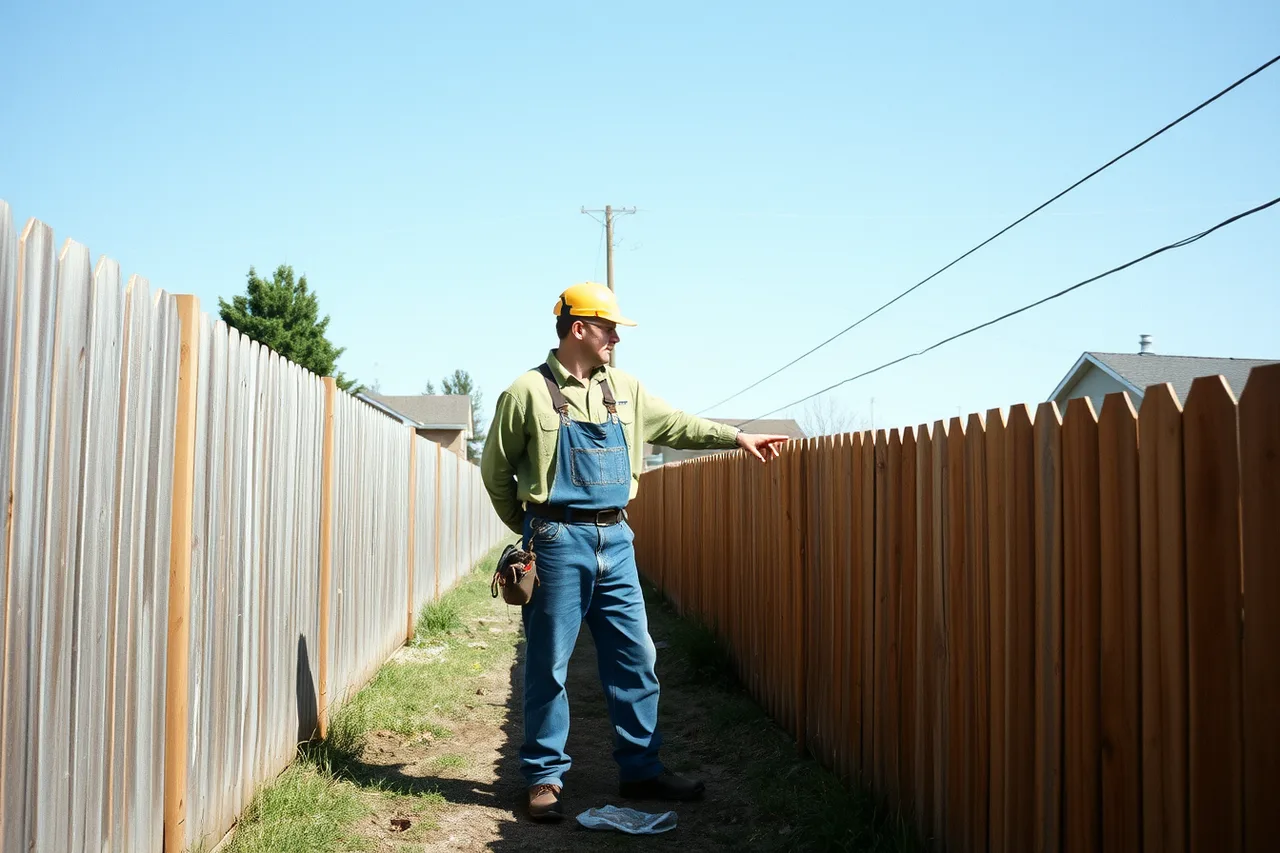
The neighbor watches the whole job. They see whether the crew was tidy, whether the line was discussed openly, whether the finished face is turned toward them, and whether anyone spoke to them at all. On a boundary fence they may also have a legitimate interest in where it sits.
Speaking to the neighbor before work starts costs a few minutes and removes the most common source of a mid-job complaint. It also produces work, because they now have a specific opinion about a specific contractor rather than a search result.
Signs, trucks and the street
Fencing is a local, visible trade, and the cheapest advertising is the job itself.
- A yard sign on every residential job, placed with the homeowner's permission on the side that passing traffic sees, and taken down when you leave.
- A job-site banner on longer builds and commercial work, where the fence line stays open for weeks.
- Lettering or a wrap on the truck with the business name and the phone number readable from across the street, parked where the work is.
- Magnetic signs for a leased or personal vehicle, so a crew member's car becomes a moving sign on the way to the yard.
A sign on a finished fence does two things at once: it answers the neighbor who is already looking at your work, and it puts a name on the fence for everyone who walks past it afterward.
The channels compared
Which events it catches
- Map and search presence
- Urgent and same day
- Visible finished work
- Planned replacement
- Neighbor conversation
- Planned, next door
- Professional referral
- Pool, agents, builders
- Signage on site
- Passing planned demand
- Repeat and past customers
- Repair, gates, extensions
What it costs
- Map and search presence
- Time to maintain
- Visible finished work
- Nothing extra
- Neighbor conversation
- Minutes per job
- Professional referral
- Slow relationship building
- Signage on site
- Small
- Repeat and past customers
- Record keeping
What it needs to work
- Map and search presence
- Accurate hours, service area, and someone answering
- Visible finished work
- Work worth seeing and a tidy site
- Neighbor conversation
- A crew willing to talk
- Professional referral
- Reliability over months
- Signage on site
- Permission, and a job you are proud of
- Repeat and past customers
- Knowing who you worked for and when
Notice that most of the effective channels in this trade cost time rather than money. The map profile, the neighbor conversation, the referral list and the yard sign carry no monthly bill; they are paid for in effort and in doing the work well.
The channels that do take money out of the account are the lead marketplaces, which charge per lead, and search advertising, which charges per click. Neither price sits still, because both move with your market and with how many other contractors are bidding against you, which is why the honest comparison here is between channels that cost time and channels that cost cash rather than between fixed figures. And all of them depend on the work itself being good: marketing a fencing business that produces callbacks is spending to accelerate a problem.
Fencing marketing channels compared
Channel
- Map and search
- Urgent
- Visible work
- Planned
- Neighbor talk
- Next door
- Professional referral
- Pool, agents, builders
- Signage on site
- Passing demand
- Repeat customers
- Repair, gates
Events caught
- Map and search
- Time
- Visible work
- Nothing extra
- Neighbor talk
- Minutes
- Professional referral
- Slow
- Signage on site
- Small
- Repeat customers
- Records
Cost
- Map and search
- Answering
- Visible work
- Tidy site
- Neighbor talk
- Willing crew
- Professional referral
- Reliability
- Signage on site
- Permission
- Repeat customers
- Knowing who and when
Needs
- Map and search
- Visible work
- Neighbor talk
- Professional referral
- Signage on site
- Repeat customers
Seasonality changes what marketing is for
A fencing year is not twelve even months. Digging slows or stops when the ground is frozen or saturated, and the selling season and the installing season are not the same length.
Fencing marketing through the year
- Ahead of seasonFill schedule quote, follow up, book
- Inside seasonTriage more leads than crew days
- Out of seasonRepair, gates, planning conversations
- Constant levelWorst of both too few then too many
Marketing has two jobs at different times. Ahead of the season it fills a schedule, and the useful work is quoting, following up and booking.
Inside the season it is triage, because more leads than crew days produce disappointed callers. Out of season it is repair, gates and planning conversations, when quiet channels like past customers and professional referrals earn their keep.
Operations that market at a constant level all year get the worst of both: too few leads before the season and too many during it. Plan the effort against the calendar the ground actually imposes where you work.
Growth is a capacity question first
Winning more work is only useful if you can deliver it. In fencing the constraint is almost always crew days, not leads.
Capacity checks before spending on demand
- Crew can complete a job without the owner
- Schedule absorbs return visits after cure
- Quoting is fast enough that leads do not go cold
Those questions relate to hiring and training a fence crew. They also relate to the fence contractor equipment and setup guide and the estimating rule in the fence contractor pricing and profit guide.
Growth also changes what you are allowed to say and where you are allowed to work. Crossing a jurisdiction line is a licensing question for the compliance side of fence work.
Adding a service family is decided in the fence contractor services and packages guide. Repeatability comes from the fence contractor service quality guide.
Marketing ends where the quotation begins
A lead is not a job. Fencing leads are lost in the handover between the call and the quote, and that handover is the part of marketing a contractor actually controls.
- Write the quote while the details are fresh, and answer the phone when it rings — the customer with a fence down is calling several contractors and takes the one who comes back first with a number they can hold.
- Put the exclusions in writingremoval and hauling of the old fence, gate hardware, permits, and what happens if the ground turns out to be rock.
- Say when you can start. For a pool owner or an agent, the date is what is being bought.
- Follow up once on the quote that went quiet. A quote that gets one call back beats a quote that gets none, and the follow-up is also the natural place for a review request.
The estimate itself, and how to price it so the job still makes money, is covered in the fence contractor pricing and profit guide.
What you may say, and how
Every claim a fencing business makes in public has to be truthful and supportable. The Federal Trade Commission: Advertising FAQs: A Guide for Small Business guidance sets out that claims must be substantiated and that qualifying information has to be presented clearly rather than buried.
Claims and reviews compliance
- Substantiate every public claim
- Present qualifying information clearly
- Avoid starting prices almost no job meets
- Write guarantee terms down
- Ask all genuine customers the same way
In this trade the risky claims are predictable. A starting price that almost no real job meets. Any statement about how quickly a job completes. Any suggestion of a guarantee whose terms are not written down. And any claim about credentials that is broader than what your license actually covers.
The credentials themselves come from outside your marketing: the state or local board or registry that licenses or registers contractors where you operate. Check the license number you advertise against what that office has on file, keep the class of work you are allowed to do inside the claim you make, and put the registration details in the quote as well as on the website.
Customer opinions are regulated separately. The U.S. Federal Trade Commission: Soliciting and Paying for Online Reviews: A Guide for Marketers guidance says review requests should go to genuine customers, not just likely positive responders.
Material connections must be disclosed. Incentives must not create a misleading picture.
The practical reading for a fencing business is to ask everybody, ask the same way, and never filter by expected sentiment. A review process that only reaches happy customers also stops telling you which detail keeps failing, which costs you more than the reviews are worth.
Reviews: how to ask, and where they land
Reviews are the cheapest engine in this trade and the one most often run badly.
- Ask in person at the completion walk, and ask the same way on every job rather than only on the ones that went smoothly.
- Send one message the same day with a direct link to the Google review form, while the fence is still the newest thing on the property.
- Keep that link in the quotation follow-up, so the customer who went quiet still has a way back.
- Let the reviews land where customers lookGoogle first, Facebook recommendations second, Nextdoor for neighborhood work. Yelp matters in some metros and much less in others.
- Never filter. Asking only the customers you expect to be happy is a compliance problem, and it hides which detail of the job keeps failing.
Photographs are the marketing asset that matters
Fencing is visual and most fencing photography is bad. The pictures that persuade are the ones that show the things a buyer worries about: a straight run seen along its length, a consistent gap at grade, a gate closed square, and a site left clean.
Take them on every job as part of the completion walk, with the customer's agreement. That habit produces a library over a season without any separate effort, and it doubles as the evidence that settles a dispute later.
Common questions
Where should a new fence business spend first?
On a claimed and complete Google Business Profile, on answering the phone, and on doing visible work well. All three are cheap. Paid lead services and search advertising before the crew can absorb the work convert leads into complaints.
Do I need a website?
You need somewhere that says what you do, where you work, and how to reach you, and that loads on a phone. Whether that is a full website or a well-maintained Google Business Profile plus a one-page site depends on your market, not on a rule.
Should I offer a discount for a referral?
Be careful. An incentive attached to a review on Google, Yelp or Facebook is squarely inside the FTC guidance and has to be disclosed. An incentive for an introduction is different from an incentive for a public opinion, and the two get confused constantly.
How do I market repair work?
By route, not by reach. Repair pays when jobs are close together, so being known in a neighborhood is worth more than being known across a county.