
Guides
Choosing where to open a fence contractor business
Markets for fence contractor work cannot be ranked nationally, so here are eight things to count in a candidate area, ground conditions included.
What to take away
- No towns, states or metropolitan areas are named here. A national ranking of fencing markets would be worthless to a reader who can only work within a drive of home.
- What can be given is the local test: eight things to count in a candidate area, all of which you can observe in a few days.
- Ground conditions matter as much as demand. An area full of rock or a high water table changes what your day produces, whatever the population does.
- Count before you commit, and count in the area you would actually serve rather than in the county the statistics describe.
Why a ranking would not help
A fencing business is bounded by a drive. Whatever the best market in the country is, you cannot work there unless it is near you, and if it is near you then the question is not which market is best but whether this one supports another crew.
The eight counts below answer that question for a specific area. They take a few days and a tank of fuel, and they beat any published ranking because they measure the ground you will actually dig.
The eight counts
One: the housing stock and its fences. Drive the residential streets and look at what is there. Age of the existing fences, materials in use, and how many are visibly failing. A neighborhood of twenty year old wood fences is a replacement market. A new development with builder installed fencing is a different market with a different buyer.
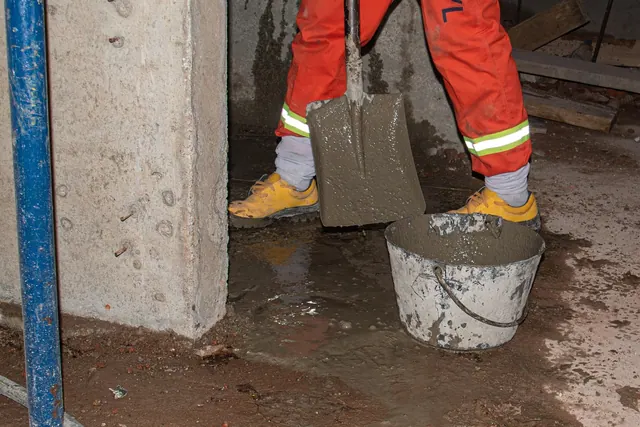
Two: the ground. Talk to anyone who digs locally and ask what the auger meets. Sand, clay, root mat, fill, or rock. Ask what the water table does in spring. This single count can make an otherwise attractive area unprofitable.
Three: the frost depth standard. Ask the local building department what depth applies for footings and posts where you work. Deeper means more time and more concrete per hole, which changes your day and your material cost.
Four: the permit process. Call the zoning or building department and ask what a residential fence requires, how long approval takes, and what the inspection sequence is. A slow process lengthens every job's cash cycle.
Five: association density. Ask how many of the residential areas sit inside homeowners associations, and how restrictive the common covenants are. High density means slower approvals and more material restrictions, but it also means more standardization once you know the rules.
Six: the demand events. Count what actually triggers fencing work locally. Property turnover, new pool permits, storm frequency, and new residential construction are all observable. Each drives a different service family.
Seven: the competition and how it behaves. Not how many contractors, but how they operate. Call two as a customer and see how long a quote takes to arrive. A market where nobody returns calls within a week has room in it regardless of the count.
Eight: labor availability. Whether you can hire someone who will reach a site lead rung. This is often the binding constraint, and it is the one people check last.
| Count | Where the answer comes from | What it changes |
|---|---|---|
| Housing stock and fences | Driving the streets you would serve | Which service family dominates |
| Ground | People who dig locally | Hours per hole, and whether you need a machine |
| Frost depth standard | Local building department | Concrete volume and time per post |
| Permit process | Zoning or building department | Job length and cash cycle |
| Association density | Local agents and associations | Approval time and material choice |
| Demand events | Permits, turnover, weather, construction | Which work exists at all |
| Competitor behavior | Calling two as a customer | Whether there is room |
| Labor availability | Trying to hire | Whether you can grow there |
Turning the counts into a decision
Score each count against your existing area rather than in the abstract. Better or worse than what you already know is a judgment you can actually make; a score out of ten is not.
Then run a small number of real jobs there before moving anything. Record travel honestly, including both visits, record what the ground did to your digging assumption, and compare contribution per crew day against your existing work. That comparison is the only test that matters, and it takes one season.
The full framing of that decision, including what a second crew requires, is in the fence contractor expansion and market guide.
What published data can and cannot tell you
The U.S. Bureau of Labor Statistics: Occupational Employment and Wage Statistics Tables publish employment and wage estimates by occupation, industry, state and metropolitan area. That is genuinely useful for count eight: it tells you what the roles you need are paid in a metropolitan area, which is one input into whether you can hire there. It does not tell you whether anyone is available, and it says nothing about fencing demand.
The U.S. Small Business Administration: SBA Business Guide covers market research and the growth stage of a small business, which is the frame the eight counts sit inside. It will not answer any of them for your area.
The Occupational Safety and Health Administration: Fall Protection in Residential Construction guidance matters wherever the terrain in a candidate area means more work above grade, on graded lots and retaining structures. A hilly market is a different safety and cost profile as well as a different installation one.
Nothing published will tell you what the auger meets. That comes from asking people who dig.
What to do with a positive result
If the counts favor an area, plan the entry rather than announcing it. Confirm what changes across the jurisdiction line, decide whether the kit you have suits the ground you found, and update the assumptions you are working from.
The equipment question follows from count two and count three, and the reasoning is in the fence contractor equipment and setup guide with the practical kit in the equipment checklist for new owners. Count eight feeds directly into hiring and training a fence crew. All of it belongs in the revised assumptions of your fence contractor business plan, which is where the decision should be recorded rather than in a conversation.
Common questions
Is a growing population a good sign?
Only if it is growing in a way that produces fencing work. New multifamily construction may produce very little residential fencing, while steady turnover in an area of aging fences produces a lot.
Should I follow new construction?
That is builder work, bought on schedule reliability and paid on someone else's terms. It can be good business and it is a different business from residential replacement. Do not treat one as practice for the other.
How large should a service area be?
As large as you can serve with two visits per job without the travel eating the contribution. Compute it from your own records rather than from a radius that sounds reasonable.
What if my current area is the only one within reach?
Then the useful question becomes depth rather than geography: raising your installable hour ratio, adding a service family that uses the crew you have, and improving conversion. That is usually available and usually cheaper than moving.