Guides
Fence contractor equipment brands compared in 2027
Fence contractor equipment brands compared for 2027, from Ditch Witch and Vermeer to Stanley and Little Beaver, on parts, service and cost per day.
What to take away
- The brands a fencing crew actually meets in 2027 are Ditch Witch, Vermeer, Toro, Bobcat, Little Beaver, Stanley, DeWalt, Milwaukee and Makita.
- The split that matters is not brand against brand. It is whether a dealer within a day's drive stocks the parts that fail.
- A hydraulic driver from Ditch Witch or Vermeer and a towable auger from Little Beaver or Barreto solve different jobs, and buying one when you needed the other is the expensive mistake.
- Resale holds on Ditch Witch, Vermeer and Bobcat because the rental fleets turn them over and the used market clears.
- Score cost per productive day, not sticker price. Downtime is the line that decides it.
The brands, and what each is for
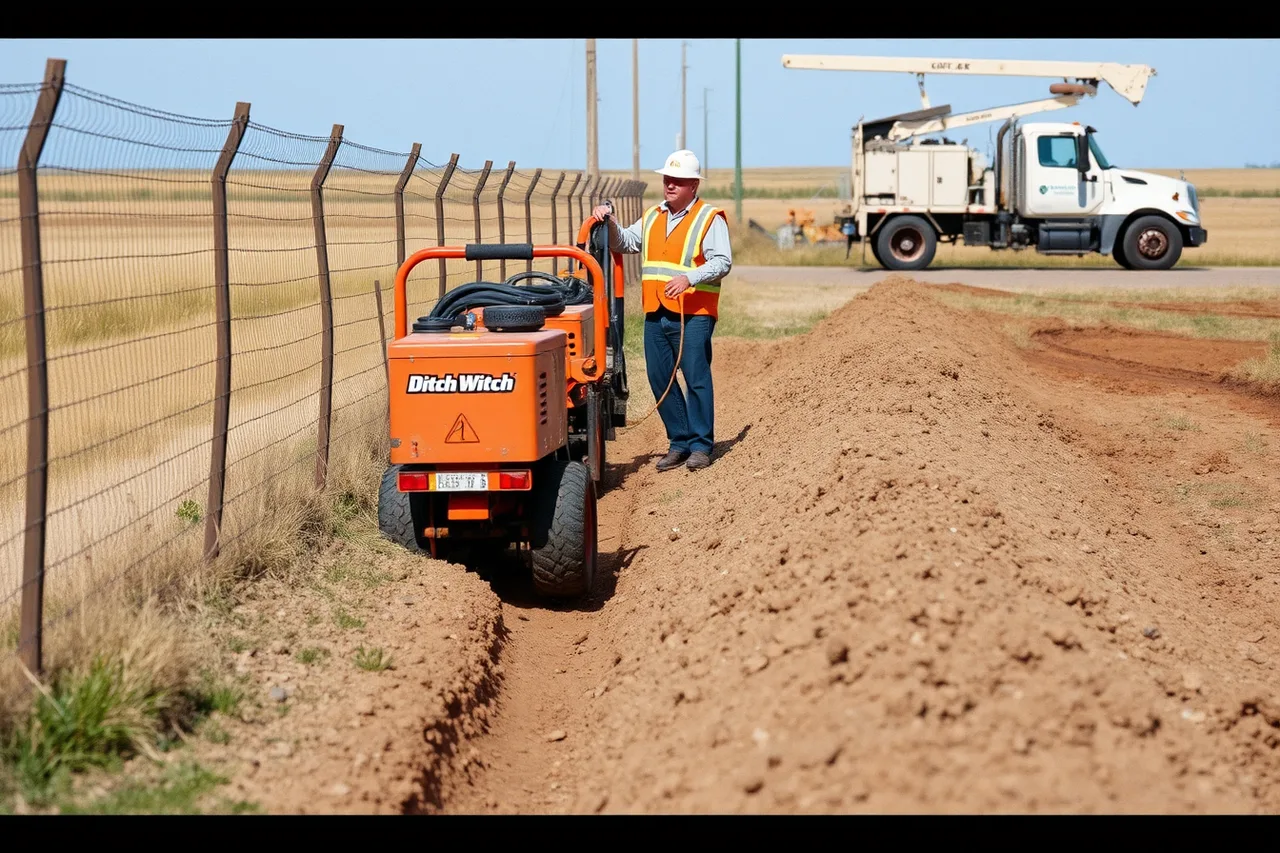
Ditch Witch builds walk-behind trenchers and hydraulic earth augers, and its equipment is the default on utility and fence work across the US Midwest and South. Dealer coverage is the reason. A crew in Texas or Ohio can usually get a part the same day from a regional dealer, and that matters more than a spec sheet.
Canada remains a second market for the same brands.
Typical US prices in 2027: a new walk-behind trencher runs from about $15,000 to $30,000. A towable Little Beaver auger typically runs $3,500 to $6,000. A used Bobcat skid steer with an auger attachment typically runs $25,000 to $45,000.
Vermeer makes comparable trenchers and auger drives, with a strong rental and municipal presence. Its machines hold resale well because the rental houses turn them over on a schedule, which keeps a used market moving. Representative models are the Vermeer RTX100 and RTX250 walk-behind trenchers.
Toro sells walk-behind trenchers and compact utility loaders through a dealer network that also carries turf and irrigation equipment. That overlap suits crews working in finished yards, where ruts cost money. Common models are the Toro TRX-20 trencher and the Toro Dingo TX 525 compact utility loader.
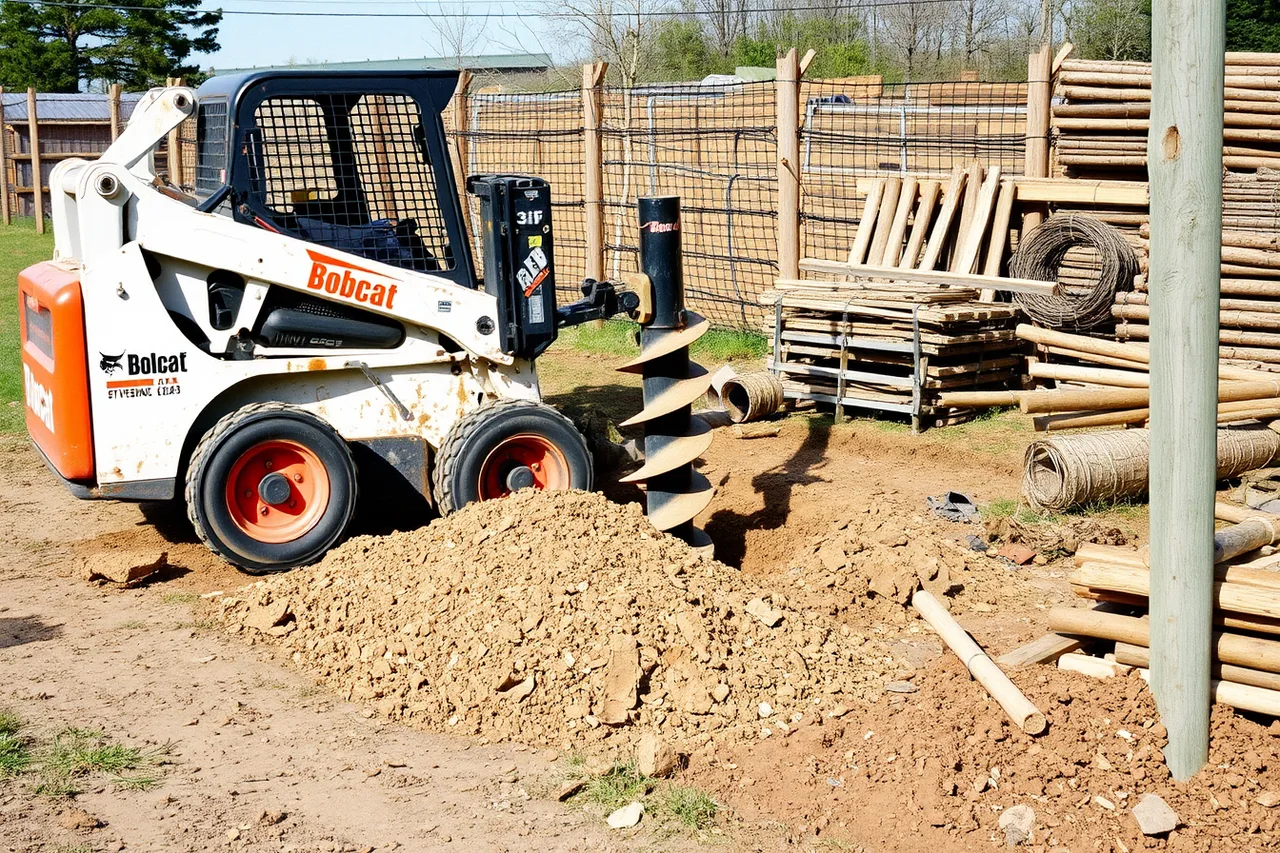
Bobcat is the compact track and skid loader name, and the attachment market around it is the widest of any brand here. If your work is post holes at volume, a Bobcat with a hydraulic auger attachment is a common answer.
Representative machines are the Bobcat S650 skid steer and the Bobcat T770 track loader, with a Bobcat 30C auger attachment.
Little Beaver builds towable and handheld augers, and it is the machine a small crew buys first. It fits through a gate, tows behind a half-ton, and costs a fraction of a skid steer. Models include the Little Beaver Hydraulic Earth Auger and the Little Beaver Towable Auger.
Barreto makes compact trenchers and stump grinders with a reputation for digging in tight access. It is the choice when the job is behind a house and the gate is thirty inches. Common models are the Barreto 1320 and 2036 trenchers and the Barreto 30S stump grinder.
Stanley, DeWalt, Milwaukee and Makita cover the cordless side: impact drivers, rotary hammers, cutoff saws and the batteries that run them. On a fencing truck the deciding factor is which battery platform you already own, because batteries are the running cost.
DeWalt 20V MAX XR and Milwaukee M18 FUEL are two common platforms on fencing trucks. Makita 18V LXT is a third. Stanley's cordless offering is narrower. Representative models are the DeWalt DCF887 impact driver, the Milwaukee 2953-20 impact driver, and the Makita XDT16 impact driver.
| Brand | Main fence equipment | Who it suits | Pricing model |
|---|---|---|---|
| Ditch Witch | Walk-behind trenchers (C16, C24), hydraulic augers | Utility and fence crews needing same-day parts | Dealer sale, rental fleet turnover |
| Vermeer | Trenchers (RTX100, RTX250), auger drives | Crews wanting strong resale | Dealer sale, municipal and rental channels |
| Toro | Walk-behind trenchers (TRX-20), compact loaders (Dingo TX 525) | Yard work where turf damage matters | Dealer network, turf and irrigation dealers |
| Bobcat | Skid steers (S650), track loaders (T770), attachments (30C auger) | High-volume post hole work | Dealer sale, widest attachment market |
| Little Beaver | Towable and handheld augers (Hydraulic Earth Auger, Towable Auger) | Small crews, tight access | Direct and dealer sale, low entry price |
| Barreto | Compact trenchers (1320, 2036), stump grinders (30S) | Tight-access digging | Dealer sale |
| Stanley, DeWalt, Milwaukee, Makita | Cordless drivers, hammers, saws (DeWalt DCF887, Milwaukee 2953-20, Makita XDT16) | Every crew | Retail and dealer, battery platform locks you in |
How to compare them without a showroom
Pick the two jobs you do most and price each machine against them. A towable auger from Little Beaver and a skid steer with a Bobcat auger attachment both drill post holes. They do not both fit through the same gate.
Cost per productive day formula
- Cpurchase price
- Rresale value after N years
- Mannual maintenance and parts
- Ddays lost to breakdown and parts waits
Then run the arithmetic in your own numbers. Let C be purchase price, R be resale value after N years, M be annual maintenance and parts, and D be days lost per year to breakdown and parts waits.
Cost per productive day is (C - R + M x N + D x your crew day rate) divided by the productive days you actually work in N years.
Here is a worked example. A used Bobcat S650 with a 30C auger costs $35,000 (typical). Resale after five years is $18,000. Maintenance and parts run $1,500 a year. The machine loses four days a year to breakdowns. Your crew day rate is $1,200.
The numerator is $35,000 - $18,000 + ($1,500 x 5) + (4 x $1,200 x 5), which is $48,500. Over 750 productive days, cost per productive day is about $65. A towable auger at a typical $4,500, with $1,000 resale and $500 in parts over five years, costs about $5 per productive day.
Published crew day rates for your state or metro area are the place to get that number.
Two of those variables decide more than the rest. D is the one nobody puts in the spreadsheet, and it is the one that separates a Ditch Witch from a bargain. R is the one that separates a Vermeer from a brand with no used market.
Equipment hazard control and safety checks
Some of the comparison is safety in commercial clothing. Guards, controls, one-person operation and a real manual decide whether the machine can be run correctly when the schedule is tight.
The Occupational Safety and Health Administration: Safety Management recommended practices cover hazard identification and control, training, and reviewing whether it works. Equipment choice is the earliest and cheapest place to control a hazard.
Where any of the work is above grade, the Occupational Safety and Health Administration: Fall Protection in Residential Construction guidance sets out what is expected.
Recording what you bought and why
Keep the comparison sheet with the purchase documents. The Internal Revenue Service: What kind of records should I keep? guidance covers supporting documents for purchases and assets.
The sheet earns its keep later. In two years you can see which of your judgments about parts and access were right, and the next purchase starts from evidence rather than memory.
The arithmetic behind cost per productive day sits in the new versus used equipment cost guide. What a fencing crew needs at all is in the fence contractor equipment and setup guide.
The daily load-out sits in the equipment checklist for new owners. Whether local work supports owning the machine is a counting question, addressed in the best markets for a fence contractor business.
Common questions
Are brand differences real?
Between well supported and poorly supported models, yes, and it shows up as parts and service rather than performance. Between two well supported models, the gap is often smaller than the gap between your two typical job sites.
Should I just buy what the local dealer sells?
That is a defensible reason, because local parts and local service are the two things that cost you days. Just make it a deliberate reason rather than a default.
How do I judge a machine I cannot try?
Ask to see one working on a real job, ask the operator what breaks, and ask the parts counter what they stock for it. The parts counter is the most honest source in the building.
Does this apply to hand tools too?
The serviceability logic does. For hand tools the deciding factors are usually weight, balance at the end of a long day, and whether replacement parts exist. The list is shorter but the reasoning is the same.