Guides
Coastal fence materials in Halifax and St. John's, salt, wind and rock
This fence guide compares treated wood, galvanized and stainless fasteners, and post-setting methods for Halifax and St. John's salt, wind and rock.
What to take away
- This fence guide covers treated wood, galvanized and stainless fasteners, and post-setting methods for Halifax and St. John's.
- CSA wood preservation standards and treatment retention levels decide how long a coastal post or board survives salt spray and freeze-thaw.
- Galvanized fasteners suit sheltered runs; stainless fasteners are the safer default within roughly a kilometre of open water.
- Rocky ground in St. John's and parts of Halifax rules out simple augering, so rock anchors, drilled sockets and surface-mount bases carry the load.
- Wind loading, not wood decay, is often the limiting factor on exposed coastal sites, so post spacing, depth and bracing matter more than board thickness.
- Quote coastal work as separate line items for material grade, fasteners, excavation and wind bracing so the premium is visible.
Atlantic Canada coastal conditions that shape fence material choices
Halifax and St. John's sit in the same broad maritime climate but punish fences differently. Halifax gets salt-laden onshore wind, driving rain and a freeze-thaw cycle that opens joints.
St. John's adds fog, heavy wet snow and ground that is often bedrock under a thin skin of till. Both cities see hurricane remnants and post-tropical storms that arrive with little warning.
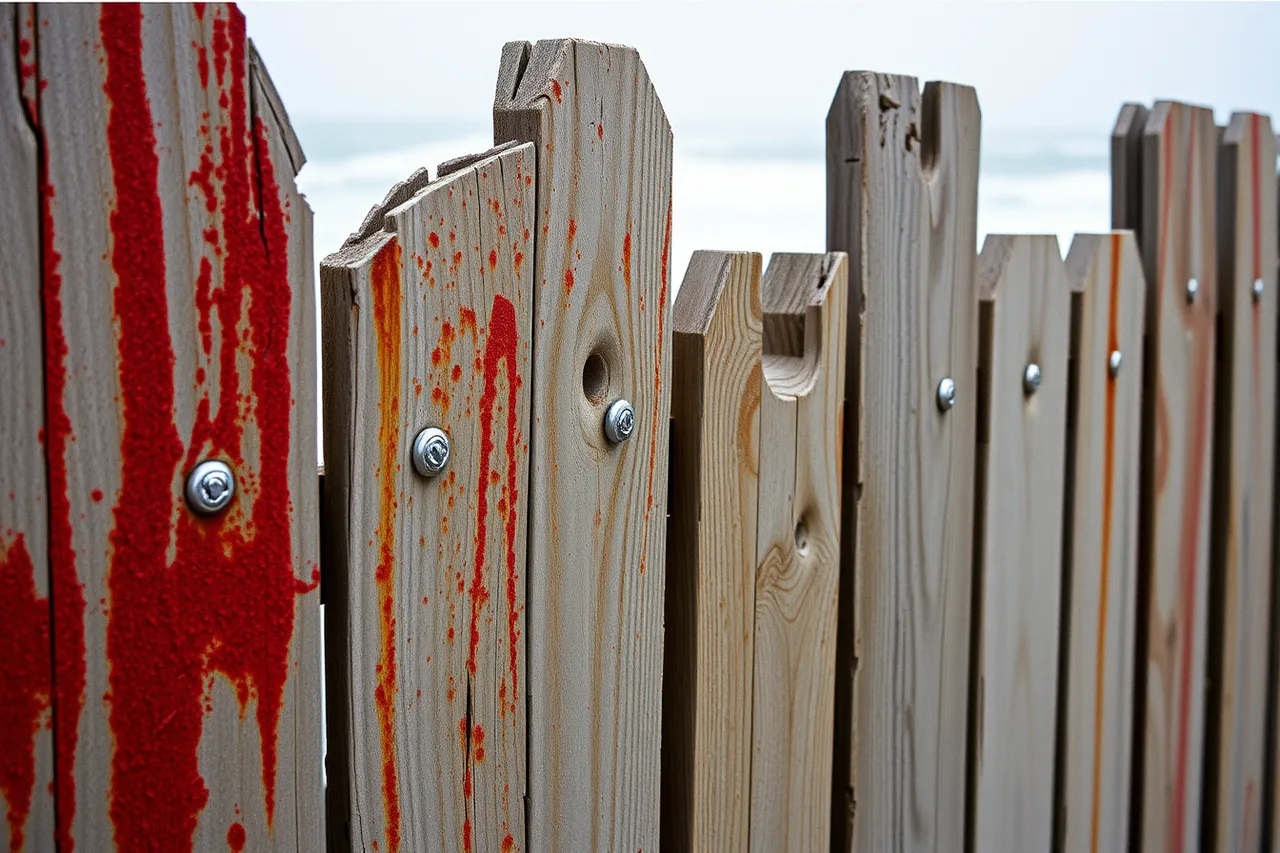
Salt spray is the quiet problem. Airborne chloride settles on metal and wood, then rain carries it into fasteners, hinges and post bases. Steel that would last decades inland can show red rust within a few seasons on a harbour-facing lot in Halifax or along the St. John's waterfront.
Wind is the loud problem. A solid board fence acts as a sail. On an exposed headland the fence takes the full gust, and the failure usually starts at the post, not the panel. That is why material choice and post-setting method have to be decided together.
Frost matters too. Nova Scotia and Newfoundland soils freeze to varying depths, and heave can lift a shallow post out of its hole. Contractors who set posts by habit rather than by local frost depth end up repairing leaning fence lines in spring.
Physical hazards on site, from unstable rock to power tools, are a separate planning task covered by CCOHS guidance on physical hazards in the workplace.
Treated wood and CSA wood preservation standards for Halifax and St. John's
The treated wood comparison for coastal Atlantic Canada starts with the treatment, not the species. Most fence lumber sold in Nova Scotia and Newfoundland is spruce, pine or fir, pressure treated to a preservative system that resists decay and insects. CSA wood preservation standards set the retention and penetration requirements that a legitimate treatment plant must meet.
For ground-contact posts, the relevant Canadian standard is CSA O80, which covers wood preservation and specifies treatment classes by end use. A post buried in soil needs a heavier retention than a rail that stays dry. Ask your supplier for the treatment class and the preservative system, not just the phrase "pressure treated."
Treated wood and CSA standards
| Component | Exposure | Treatment class to ask for | Notes |
|---|---|---|---|
| In-ground post | Soil and moisture | Ground contact, CSA O80 | Highest decay risk |
| Bottom rail | Splash and snow | Ground contact | Often overlooked |
| Top rail and pickets | Weather only | Above ground | Lighter retention |
| Concrete-embedded post | Alkaline contact | Ground contact plus barrier | Wrap or isolate |
Incising, the practice of cutting small slits into the surface, helps treatment penetrate species that resist absorption. It is normal in Canadian treated stock and does not weaken the board meaningfully at fence dimensions. What does weaken it is field-cutting a post below the treated zone, which exposes untreated heartwood to soil.
Cut ends and notches should be treated in the field with a brush-on preservative. This small step separates a fifteen-year fence from a twenty-five-year fence on a Halifax or St. John's lot.
Cedar and other naturally durable species are an option, but Atlantic Canadian supply is limited and pricey, so most coastal work still runs on treated wood.
Galvanized versus stainless fasteners for salt spray exposure
Fasteners fail before wood does on the coast. The choice between galvanized fasteners and stainless fasteners is the single most common coastal specification question, and the answer depends on how much salt the fence will see.
Hot-dip galvanized fasteners carry a zinc coating that sacrifices itself to protect the steel beneath. In sheltered inland Halifax neighbourhoods, or on a St. John's lot screened by buildings, that coating can hold up for years. In direct salt spray, the zinc is consumed quickly and the fastener starts to rust.
Stainless fasteners resist chloride attack far better. Grade 304 stainless handles most coastal exposure; grade 316 is the choice for direct waterfront, where chlorides are constant. Stainless costs several times more per piece, but a fence has hundreds of fasteners, and replacing them means pulling boards.
Mixing metals causes trouble. Stainless screws in galvanized brackets, or galvanized hangers on stainless posts, can set up galvanic corrosion in wet, salty conditions. Keep the metal family consistent through the assembly. A quote, line by line, makes this visible to the client instead of hiding it in a lump sum.
Post-setting methods for rocky ground in Halifax and St. John's
Rocky ground post-setting methods are where St. John's work diverges most from the mainland. Bedrock close to the surface means a conventional augered hole may not be possible, and blasting is rarely an option on a residential lot. Halifax has its own rocky pockets, particularly around the harbour and the older parts of the city.
The first step is always a test dig or probe. Knowing what is under the fence line before quoting prevents the worst kind of surprise. Once ground conditions are known, the method follows.
Post-setting methods for rocky ground
- Probe the full fence line for depth to refusal before pricing the job.
- Where soil allows, auger to local frost depth and set the post in concrete with a crowned top so water drains away.
- Where rock is shallow, drill a socket into bedrock and anchor the post with an approved anchoring adhesive or expansion anchor.
- Where drilling is impractical, use surface-mounted post bases on concrete pads or engineered ground screws rated for the load.
- Backfill rock sockets with non-shrink grout so the post cannot work loose over winter.
- Record the method used at each post so a future repair crew knows what it is dealing with.
A common St. John's approach is the rock anchor: a steel pin or threaded rod set into a drilled hole, with the post base bolted to it. This keeps wood out of standing water and puts the load into bedrock.
On sloped sites, step the fence in short runs rather than following the grade, which keeps panels square and reduces wind catch.
Wind loading and fence design for high-wind coastal sites
High wind and salt spray conditions together decide how a coastal fence should be built. Wind pressure rises with height and with the solidity of the fence, so a six-foot solid board fence on an exposed Halifax or St. John's site carries a much larger load than a four-foot picket fence in a sheltered yard.
Post spacing is the first lever. Pulling posts closer together reduces the span each one carries. Post depth and embedment matter just as much, because a post that is deep enough resists the overturning force that a gust applies at the top.
Bracing and panel design help. Diagonal bracing at corners and gate posts stiffens the line. Leaving gaps between boards, or using a semi-privacy design, lets wind pass through and cuts the load. Metal posts set in concrete are a common coastal upgrade because they resist rot and hold a straight line.
Gates are the weakest point. A wide gate on an exposed corner acts as a sail and racks the frame. Use a metal frame or a diagonal brace on every gate leaf, and specify heavier hinges than an inland job would need.
A service quality honest approach means inspecting gate hardware at handover and telling the client what to watch for.
The same logic applies to tool and crew planning. Coastal sites mean longer walks, harder ground and more hardware handling, so equipment rated on what actually matters keeps the crew productive when the ground fights back.
Material and installation line items for a coastal fence quotation
Coastal work should be quoted as separate line items so the client can see where the money goes. A lump sum hides the stainless upgrade and the rock anchors, and that makes the price look arbitrary next to an inland quote from a competitor.
- Treatment class and preservative system stated for posts, rails and pickets
- Fastener specification named as hot-dip galvanized or stainless, with grade
- Post-setting method listed per section, including rock drilling or surface mounts
- Concrete volume, grout and anchoring adhesive allowed for
- Wind bracing, gate framing and hinge grade included
- Site access, disposal of spoil and rock removal priced separately
- Warranty terms and the maintenance the client must perform
Labour is the other variable. Rock drilling and hand excavation take longer than augering, and that time has to be in the price. A crew that quotes coastal work at inland rates absorbs the difference. Understanding pricing and profit on these jobs means tracking the extra hours and charging for them.
Equipment choice feeds into the same number. New versus used fence contractor gear affects how much capital sits behind each job, and rock augers, core drills and mixers are not cheap. Buy or rent based on how much rocky ground you actually work.
Compliance is part of the quotation too. Fence contractors in Nova Scotia and Newfoundland and Labrador must follow provincial workplace safety rules, and the federal picture is set out in the CCOHS summary of acts and regulations governing workplaces.
Knowing which standards apply to treated wood, fasteners and anchoring keeps the specification defensible if a client questions it.
The CCOHS overview of standards relevant to construction work is a useful starting point when a supplier's claim needs checking. GST/HST registration through the Canada Revenue Agency applies to fence work in both provinces, and input tax credits on materials and equipment are part of the margin calculation.
Small contractors can also draw on Canadian Federation of Independent Business resources for tax and regulatory questions.