
Guides
Fence contractor services and how each one uses the day
How each fence contractor service, from installation and replacement to repair, gates and specification work, uses the truck and the crew day.
What to take away
- Each service family uses the truck and the week differently, so each one is scheduled differently.
- Installation runs on crew days and material flow. Repair runs on route density and diagnosis.
- Gates and specification work carry callbacks and waiting that a plan built on feet of fence never shows.
- A promise about timing is a package promise. It needs a boundary and wording the customer has agreed to.
Why a week planned in feet breaks
A week planned in feet of fence breaks on the first awkward job. The operations inside one job do not scale together. Panel hanging is roughly proportional to length, while digging follows hole count and what is in the ground.
Layout follows how uncertain the boundary is. Gate work is nearly independent of length. Mobilization is a fixed cost paid every time the truck moves, which is why the same published price can be comfortable on one job and a loss on the next. How the price itself is built from operations is a separate question.
What each operation scales with
Operation
- Panel hanging
- Fence length
- Digging
- Hole count, ground
- Layout
- Boundary uncertainty
- Gate work
- Nearly independent of length
- Mobilization
- Fixed cost per trip
Scales with
- Panel hanging
- Digging
- Layout
- Gate work
- Mobilization
How each service family fills the day
Read each family by what it does to the day. New installation spends crew days on accuracy, replacement puts demolition in front of that, repair is travel and diagnosis, gates are the moving part, and specification work waits on someone else's document.
Service families and what they sell
Family
- New installation
- Accuracy, straight line
- Replacement
- Demolition, old footing removal
- Repair and sections
- Travel and diagnosis
- Gates
- Moving part that fails
- Specification driven
- Compliance with a document
What it really sells
- New installation
- Replacement
- Repair and sections
- Gates
- Specification driven
| Family | What takes the time | Where the schedule slips |
|---|---|---|
| New installation | Walking the line, locates, digging, setting, return after cure | A line placed wrong, which comes back as a removal |
| Replacement | Demolition and old footing removal | Surprises under the old run, found mid job |
| Repair and sections | Travel and diagnosis | Misreading why a post moved, so a second visit |
| Gates | Hardware, post sizing, swing geometry | Sag and drag as the ground settles |
| Specification driven | Reading and meeting a document | Approval refused after install |
In replacement, the old fence answers questions the survey would otherwise have to: where the line was assumed to be, how deep the last crew went, and whether the previous posts were concreted. It also hides surprises, since the old footings have to come out. Leave room in the day for them.
Specification driven work covers pool enclosures, sight screening required by a condition, agricultural fencing, and anything a homeowners association has written rules about. The document belongs to the customer or the authority, so read it before the quote, not after the posts are in. The building code rules are one such document.
Repair days and install days
Keep repair and install on separate days. Repair work runs on route density and diagnosis, installation runs on crew days and material flow, and they compete for the same truck. A mixed day lets a two hour repair cost half an install day in travel and setup.
Repair vs installation scheduling
Repair work
- Runs on
- Route density, diagnosis
- Runs on
- Crew days, material flow
- Competes for
- The same truck
- Schedule as
- Repair days
- Schedule as
- Install days
Installation work
- Runs on
- Runs on
- Competes for
- Schedule as
- Schedule as
Fence them off in the schedule with repair days and install days. Operations that do not make that separation tend to conclude that repair work is unprofitable, when what is actually unprofitable is interleaving it. Judge repair against the most profitable services only once it has its own days.
The skill sold in repair is knowing whether a leaning post is a settlement problem, a frost problem or an installation problem. The answer decides whether one post or twelve need attention, so the diagnosis visit deserves its own time in the day.
The gate is a separate piece of work
Plan the gate as its own piece of work, not as the last two hours of a fence job. Gates fail first. They carry their own weight through hinges, they are used every day, and they sit on posts that take a cyclical load nothing else in the run experiences.
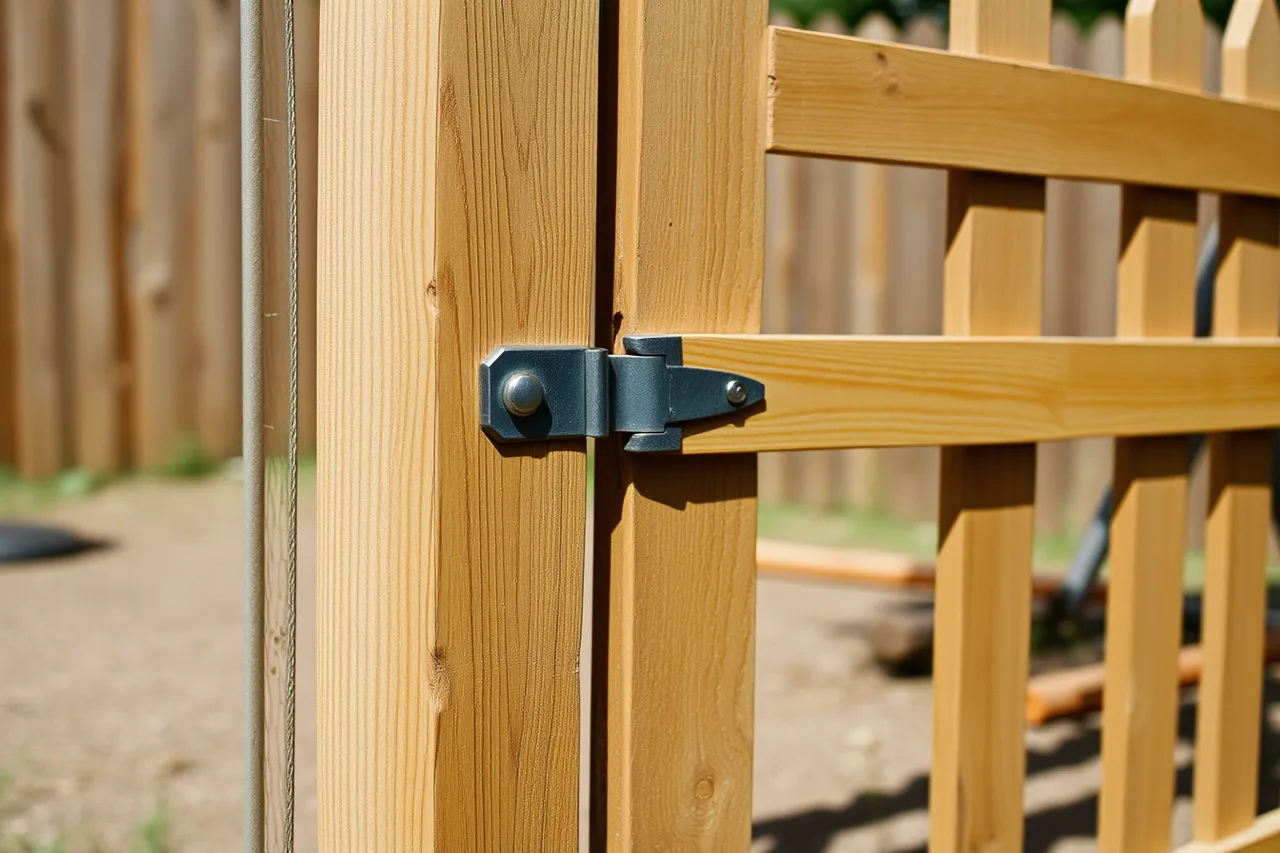
Give it its own scope: post sizing, hardware, swing direction, latch height, ground clearance across the arc, and what happens if the ground under the swing is not level. A gate post that would be adequate mid-run is often not adequate at a gate.
Customers who understand they are paying separately for the gate are far less surprised when the gate is what needs adjusting a season later. That adjustment is a planned visit, not a failure of the whole job, and it belongs on the schedule as a short stop rather than as an emergency that displaces an install day.
Promising timing without promising the ground
A timing promise is a package promise, and it needs a boundary. A package removes a decision from the customer without removing a risk from you, so the boundary falls on the things you control. Everything else is named explicitly. The exclusions that define a package get their own treatment.
Inside vs outside the package
Inside package
- Materials
- Property line
- Labor
- Permit, association approval
- Standard hardware
- Rock excavation
- Waste removal
- Buried structures
- Defined cleanup
- Anything under old fence
Outside package
- Materials
- Labor
- Standard hardware
- Waste removal
- Defined cleanup
The wording matters more than the list. "Excludes rock" is an argument waiting to happen. "If ground conditions prevent augering to the specified depth, work stops and the additional method is quoted before it proceeds" is a process the customer agreed to.
Utility locating is the wait you do not control. The Pipeline and Hazardous Materials Safety Administration says a call to 811 lets affected facility operators locate and mark their underground facilities in the area in which you are digging. The marks have to exist before the digging operation starts.
Any statement about how long an installation takes is a claim, and it must be supportable. The Federal Trade Commission says ad claims on the Internet must be truthful and substantiated, so a published package page gets the same discipline as a quote.
Keeping the hours behind each service
A schedule is only as good as the hours behind it. Keep actual hours by operation, not by job, so layout, locating, digging, setting, panels and gate can each be compared with what you assumed.
The records behind it are the same ones that show which service family carries the business.
Keep the reason for every change order too. A pattern of mid job surprises in replacement work, or of second visits in repair, shows up in the reasons long before it shows up in the margin.
Material quantities by job belong in the same file, so waste is visible and the next quote starts from what was used, not from what was assumed.
Common questions
Should gates be quoted with the fence?
Treat the gate as a separate line item with its own scope. A customer who knows the gate is paid for separately is less surprised when it needs adjusting later.
How many service lines should a small operation run?
Few enough that the crew can deliver each without the owner present. Every additional package adds a material to stock, a technique to maintain, and a way for a quote to be wrong.
Can a package include the permit?
You can include handling it, but you cannot promise the outcome. Whether a permit is required, and what it requires, comes from the local zoning or building department for that parcel. Say that you will apply, not that approval is assured.
Where does a second visit go in the plan?
On the day type that matches it. A gate adjustment or a return after cure is repair-style work, so it joins the route-based days, not an install day where it would cost the crew its travel and setup time.
What belongs in a maintenance offer?
The things that actually drift: gate alignment and hardware, post movement after the first freeze and thaw cycle, fastener tightness on wood, and tension on chain link fabric.